
Roofing Tips · Oakland & Alameda
Roof Repair or Replacement Starts With Your Roof’s Condition
The short answer: match the work to the problem
Repair may make sense when damage is limited and the surrounding roof remains serviceable. Replacement deserves consideration when deterioration is widespread or a practical repair cannot address the wider condition. A leak, roof age or a photograph alone cannot settle the decision. The useful question is what an assessment reveals about your particular roofing system.
For an East Bay homeowner, choosing between roof repair and replacement can feel like comparing two very different commitments. One estimate may describe a small affected area; another may include the entire roof covering and related components. Before comparing the totals, understand what each recommendation is intended to solve. Otherwise, a lower price or a more extensive scope can appear convincing without answering your actual concern.
This guide explains the evidence to discuss, how materials and drainage affect the conversation, and what belongs in a written estimate. Whether your home is in Oakland or Alameda, begin with the roof you have, its repair history and your plans for the property. You do not need to diagnose it yourself. You need enough information to ask clear questions and understand the proposed next step.
Roofing Tips · Repair options
When Can a Roof Repair Be the Right Choice?
Separate an isolated defect from a wider problem
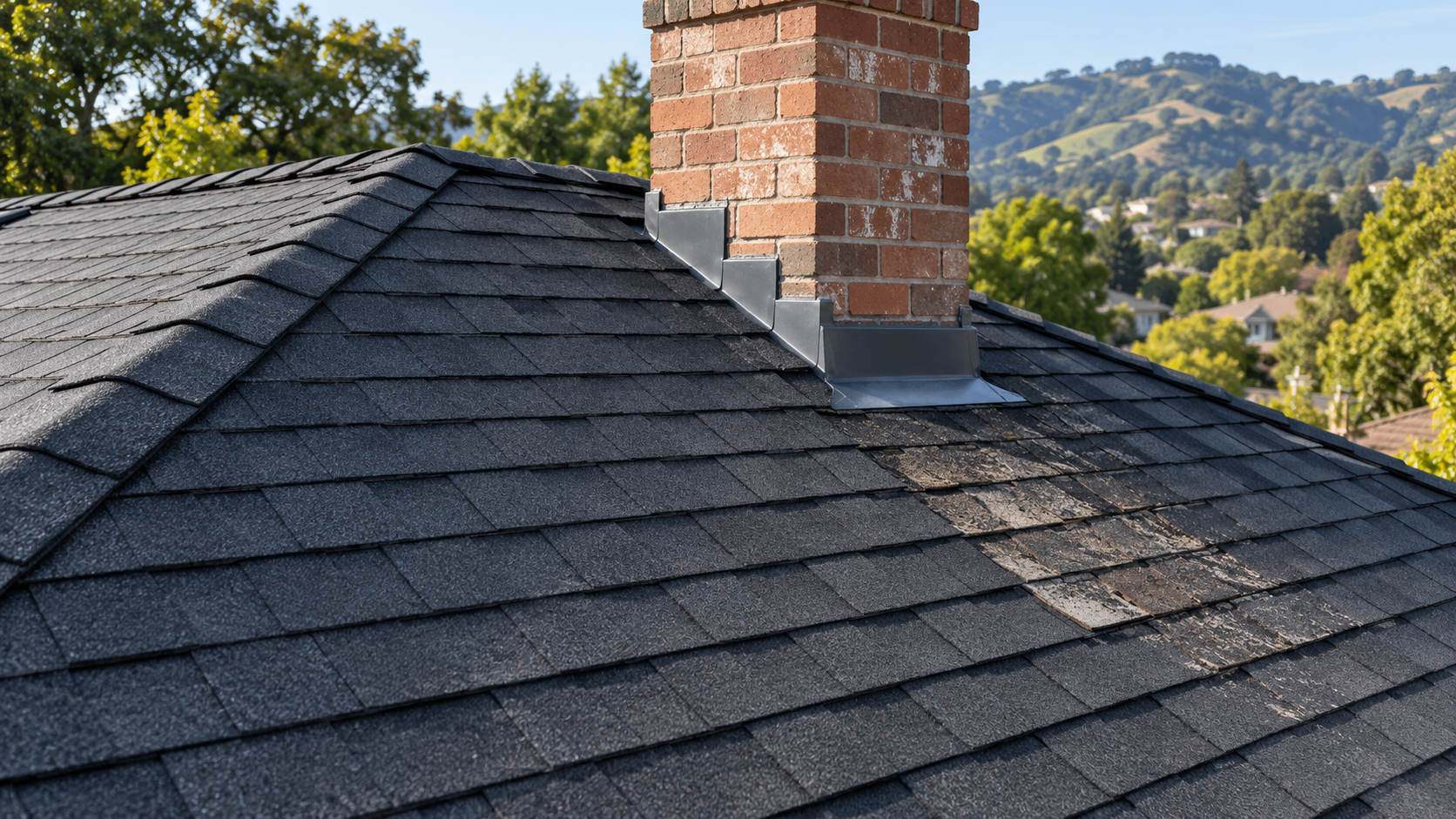
A limited area of damaged roofing or a specific flashing defect may allow a focused repair. That possibility depends on what surrounds the damaged area and whether the repair can connect properly with the existing system. Ask the contractor to identify the affected components and explain why the surrounding materials can remain in place. A useful recommendation describes both the defect and the limits of the proposed work.
For example, a leak near one roof penetration raises a different question from damage appearing across several roof slopes. The estimate should show which situation the assessment supports. Do not assume that a small indoor stain means a small roofing repair, or that one missing shingle automatically means replacement.
Find the source before choosing the repair
Visible water indoors may appear away from the roof entry point. If the cause is uncertain, discuss roof leak detection before selecting a repair scope. Tell the roofer when the leak appears, whether wind seems to matter and what was repaired previously. Ask how the findings support the recommendation rather than relying only on the location of the stain.
Roofing Tips · Replacement planning
When Should You Consider Roof Replacement?
Look at the pattern of deterioration
A roof replacement discussion becomes more useful when it explains the overall condition: which areas are deteriorating, whether problems recur and what a smaller repair would leave unresolved. Ask whether the recommendation concerns the roof covering alone or other components as well. Have the contractor distinguish visible findings from conditions that may only become clear once work begins.
Roof age belongs in that discussion, but it is background information rather than a complete diagnosis. Installation details, material condition, exposure and previous maintenance can differ between homes. An age-based rule cannot tell you whether your specific roof needs limited work or a wider project.
Ask what each option leaves for later
If repair and replacement are both practical, ask what each would accomplish now and which concerns would remain. Discuss your plans for the property and the inconvenience of repeated visits, without assuming a repair has a guaranteed lifespan. Request a written explanation when the recommendation changes from a localized repair to replacement. That explanation makes the decision easier to evaluate and gives you a record to revisit.

Roofing Tips · Materials & drainage
How Do Roofing Materials and Gutters Affect the Decision?
Review the roof covering and the details beneath it
The assessment should reflect the actual material. For shingle roofing, ask how the affected shingles and surrounding roof details will be handled. For tile roofing, ask whether the concern involves visible tiles, the components beneath them or a transition around a penetration. Similar-looking symptoms can require different scopes.
Flashing is the protective detailing used at vulnerable roof transitions and penetrations. A proposal should identify relevant flashing work instead of treating every concern as damage to the main roof surface. Ask which components will be repaired, replaced or retained and what supports that choice.
Include roof-edge drainage in the conversation
Overflowing gutters and disconnected downspouts deserve attention alongside roofing concerns. Describe where water collects and ask whether gutter repair is part of the recommendation. If drainage work is separate, request a clear boundary between the scopes. Our guide to preparing an Oakland roof and gutters for rain explains what to observe safely before arranging a visit.
Roofing Tips · Estimate checklist
How Should You Compare Roof Repair and Replacement Estimates?
Compare the work before comparing the total
Two estimates are only directly comparable when you understand the work each includes. Ask for the roof areas, proposed materials, preparation, disposal and cleanup to be described. Find out how concealed damage would be documented and discussed if discovered. Do not assume a short description includes every component, or that a larger total automatically reflects unnecessary work.
Use the comparison below to organize your questions. It is a discussion guide, not a diagnosis or a formula for choosing the cheapest option. The aim is to understand the relationship between the assessment and the written scope.
Ask for clear limits and follow-up expectations
Discuss what is excluded, what arrangements are needed at the property and which care instructions apply afterward. Ask for any proposed workmanship or material warranty terms in writing; do not infer coverage from the word replacement. If something important is missing, request clarification before deciding. A specific estimate is more useful than a broad promise that the roof will be taken care of.
| Decision point | Ask about repair | Ask about replacement |
|---|---|---|
| Work area | Which defect and surrounding area are included? | Which slopes and roof components are included? |
| Remaining condition | What concerns will remain outside the repair? | Which existing components will be retained? |
| Unknown conditions | How will additional findings be handled? | How will concealed damage be documented? |
| Follow-up | What should I monitor after the work? | What care and written terms apply? |
Roofing Tips · Your next step
What Should You Prepare Before a Roofing Assessment?
Bring a short history, not a diagnosis
Collect previous estimates, repair invoices and the approximate installation date if known. Write down when the issue began, whether it returns and which rooms are affected. Photos taken safely from the ground or inside the home can support that account. Avoid climbing onto the roof to gather evidence. Your observations help the contractor plan an assessment; they do not need to prove the cause.
Also describe access constraints and any work planned near the roof. Keeping these details together reduces the chance that important information gets lost between a phone call, site visit and estimate.
Connect the recommendation with an ongoing care plan
Ask what roof maintenance makes sense after the recommended work and what changes should prompt another conversation. Banner Roofing’s residential roofing services provide a starting point for discussing the property and available scope. When you are ready, request a free roofing estimate and share the issue, location and any repair history. A clear next step begins with your building’s actual condition.
Roofing Tips · Questions & Answers
Roof Repair and Replacement Questions From East Bay Homeowners
Does one roof leak mean I need a new roof?
No. One leak can involve a limited defect, but it can also be a symptom of a wider condition. The location of visible water and the size of the stain do not establish the repair scope. Ask for the source, surrounding condition and proposed work to be explained together.
Can I replace a few damaged shingles instead of the whole roof?
Sometimes, if the damage is limited and the surrounding system allows an appropriate repair. The condition of nearby shingles and roof details matters. Ask how the repaired area will connect with the existing roof and whether the recommendation addresses the cause of the damage.
Can a tile roof leak even when the tiles look intact?
Visible tiles do not show every component of a tile roofing system. A leak investigation may need to consider transitions, flashing and components beneath the surface. Describe the symptoms rather than assuming the roof is sound because no broken tile is obvious from the ground.
How much will roof repair or replacement cost in the East Bay?
A useful price requires a property-specific scope. Roof size, access, materials, the affected components and any additional findings influence the work. Request a written estimate that identifies what is included and excluded. Compare recommendations on the same basis rather than relying on a general online price.
Is roof age enough to decide on replacement?
No. Age can help establish the history, but material condition, installation details and recurring problems also matter. Tell the contractor what you know about the roof and ask which findings support the recommendation. Avoid treating an estimated age as proof that repair or replacement is necessary.
Why does a repaired roof start leaking again?
The original source may not have been fully resolved, a different defect may have developed, or the surrounding condition may require more work. Provide the earlier repair scope and describe whether the symptoms changed. A new assessment should establish the current cause rather than assuming every recurring stain has the same explanation.
Should gutters be replaced when the roof is replaced?
Not automatically. Discuss the gutters’ condition, drainage performance and how they will be handled during roofing work. Ask whether protection, removal, repair or replacement is included. Keep any separate gutter proposal clear so the estimate reflects the work actually recommended for your property.
What should I do if water is entering while I wait for an assessment?
Keep people away from unsafe areas and avoid entering a wet roof or damaged ceiling space. Document symptoms from a safe location and contact a qualified professional about the next step. Describe active water entry when arranging the visit so the contractor understands the situation.