
Residential Roofing · Alameda
Trace the Leak Before Choosing the Repair
The stain is useful evidence, not a roof map
When water appears inside an Alameda home, the first question is often who can repair the spot above it. A better starting question is who can establish how the water entered. Moisture may travel along roof or building components before becoming visible. The room with the stain can help an assessment, but it does not identify the repair location by itself.
The best roofer for roof leak detection explains the investigation and the relationship between the findings and the proposed work. That includes saying what remains uncertain. A confident diagnosis without a clear account of the evidence is difficult for a homeowner to evaluate.
Use our Alameda roofing contractor guide to compare broader hiring criteria. This article focuses on the observations, documents and written explanations that help turn an intermittent leak into an understandable next step.
Residential Roofing · Leak history
What Should You Record When Water Appears Indoors?
Describe the pattern before the evidence changes
Write down the date, affected room and approximate location of the visible moisture. Note whether it begins early in a storm, after prolonged rain or when wind is present. Photograph the area where it can be done safely and keep the original images. A wider photograph showing the room and a closer photograph showing the symptom are often more useful together than a collection of unlabelled close-ups.
Describe changes without assigning a cause. A leak that appears after equipment work or an earlier repair deserves investigation, but timing alone does not establish responsibility. Include any known roof work, interior plumbing concerns or ventilation changes in the history. If the issue is ongoing, discuss it promptly with a qualified professional rather than waiting to assemble a perfect record. Your observations support the assessment; they are not a requirement to diagnose the roof yourself.
Residential Roofing · Water movement
Why Can the Water Entry Point Be Away From the Ceiling Stain?
Ask the roofer to connect the exterior and interior evidence
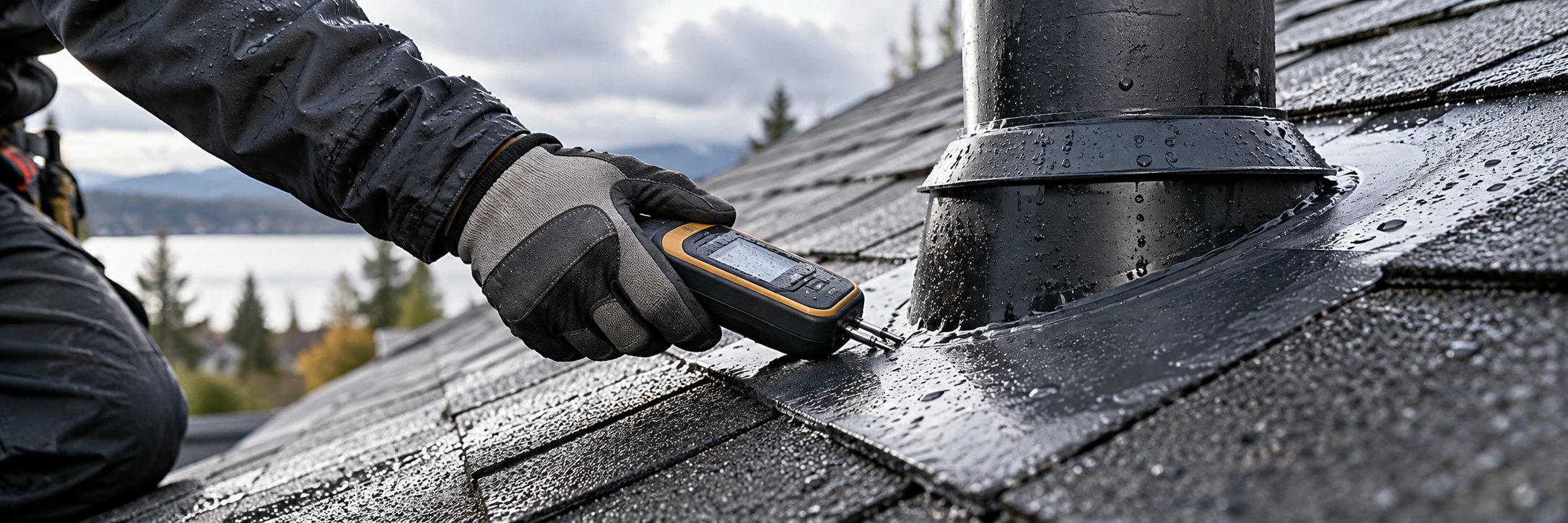
Water does not always move straight down from the first opening it encounters. It may follow a surface, a framing element or another building detail before appearing indoors. That is why a patch applied directly above the stain may miss the actual entry point. The assessment should explain which roof locations were considered and why particular findings relate to the indoor symptom.
Ask how the roof covering, penetrations, flashing and adjacent transitions were reviewed. A leak near a wall or chimney raises different questions from a visibly damaged shingle, although appearances alone remain incomplete evidence. The roofer should discuss the actual system on your home rather than assume a material or construction type from the address. Where the history suggests more than one possible source, a useful explanation distinguishes the strongest evidence from possibilities that still need review.
Residential Roofing · Assessment scope
How Should You Evaluate a Leak-Detection Proposal?
Understand the method without demanding unneeded equipment
Ask what the proposed assessment includes and what access is required. Find out whether the contractor expects a visual review to answer the question or whether another investigative step may be needed. Do not assume that a particular camera, meter or testing method is used simply because it appears in an online roofing article. Confirm the actual approach available for your property.
Clarify whether the visit is intended to identify likely causes, provide a repair estimate or carry out a defined repair. Those outcomes are related, but they are not interchangeable. Ask how findings will be recorded and which limitations would prevent a firm conclusion. If additional investigation is recommended, request an explanation of what information it would add before authorizing it. A responsible process can include uncertainty while still giving you a practical, clearly described next step.
Residential Roofing · Drainage observations
When Do Gutters and Downspouts Belong in the Investigation?
Report runoff concerns as separate observations
Tell the roofer about overflow, water spilling behind a gutter or a disconnected downspout. Those observations may matter to the assessment, but they should not be treated as proof that the drainage component caused the indoor leak. Ask which roof and drainage details were examined and how the recommended scope relates to what was found.
If damaged gutters require gutter repair, have that work identified separately from the roofing repair. If a new system is proposed, the Alameda gutter installation guide explains useful layout and estimate questions. Our existing roof and gutter rain-preparation checklist offers a way to record visible concerns from safe locations. Keeping the observations distinct helps the contractor explain whether the scopes are connected or simply need attention at the same time.
Residential Roofing · Diagnosis to scope
What Should the Repair Recommendation Explain?
Make the proposed repair follow the finding
A useful recommendation identifies the roof area involved, the condition found and the work proposed to address it. Ask which materials or details will be repaired, replaced or retained. If the assessment indicates a broader concern, request an explanation of why a limited repair would not address it. Neither one indoor stain nor one visible defect establishes the appropriate project size without that explanation.
Compare the work against the questions in the repair-versus-replacement guide. For a defined defect, review the available roof repair service and ask about exclusions, access, cleanup and additional findings. Obtain actual written terms if follow-up or warranty coverage is proposed. Do not infer that a repair guarantees the condition of every other part of the roof. A clear boundary makes future observations and conversations more useful.
| Question | Why it matters |
|---|---|
| Where is water believed to enter? | Separates the exterior finding from the indoor symptom. |
| What supports that conclusion? | Connects the proposed work to observable evidence. |
| What was not accessible? | Makes the limits of the investigation clear. |
| Which work is included? | Defines roofing and drainage responsibilities. |
| What should I record afterward? | Creates a consistent basis for follow-up. |
Residential Roofing · Intermittent leaks
What If the Leak Stops Before the Roofer Visits?
Keep the history even when the surface looks dry
A dry ceiling at the time of a visit does not erase the earlier observation. Provide the dated photographs, weather pattern and previous repair history. Ask what can be established from the available evidence and what would require another observation. Avoid declaring the problem solved solely because rain has ended or the stain has dried.
After any work, retain the findings and accepted scope. Observe the previously affected area from a safe location during later rain and record whether the symptom changes. If it returns, share the new information without assuming the entry point is identical. For local support, contact Banner Roofing about your Alameda leak and include the location, timing and roof material if known. The Alameda roofing resource hub connects this advice with the company’s local service information and other planning resources.
Residential Roofing · Questions & Answers
Alameda Residential Roof Leak Questions
How do I find the best roofer near me to locate a leak?
Compare relevant assessment experience, the proposed investigation and the clarity of the written findings. Ask how the contractor will explain the repair recommendation and any uncertainty. Confirm service for your Alameda address and verify qualifications. Avoid choosing solely from a broad best-roofer label or an assumption about specialized equipment.
Does the ceiling stain show where the roof needs repair?
It identifies where moisture became visible indoors, which may be away from the roof entry point. Record the location and timing, then ask the roofer how the exterior findings relate to that symptom. A repair should follow the assessment rather than the shortest line between a stain and the roof.
Can gutters cause the same symptoms as a roof leak?
Roofing and drainage concerns can occur together, and visible overflow deserves review. However, overflow alone does not establish the source of indoor moisture. Describe each observation separately and ask which components were assessed. Have any recommended gutter or downspout work clearly distinguished from the roofing repair.
Will the roofer always need to open the roof to find a leak?
The necessary approach depends on the system, access and evidence available. Ask what can be learned from the proposed review and why additional investigation would help if recommended. Understand the area involved, temporary protection and authorization process before agreeing to any opening or expanded work.
What if a leak returns after an earlier repair?
Share the earlier findings, scope and date, together with the current symptom pattern. Ask whether the new concern appears related to the same detail or a different condition. A returning leak needs assessment; it does not by itself prove which component or earlier decision is responsible.
What information should I send with an estimate request?
Include your Alameda address, affected room, when the leak appears, roof material if known and previous repair details. Attach photographs taken safely indoors or from the ground. Mention access constraints and any other recent work near the roof so the first discussion starts with useful context.
Related Roofing Guides
East Bay · Roofing Decisions
Should I Repair or Replace My Roof in the East Bay?
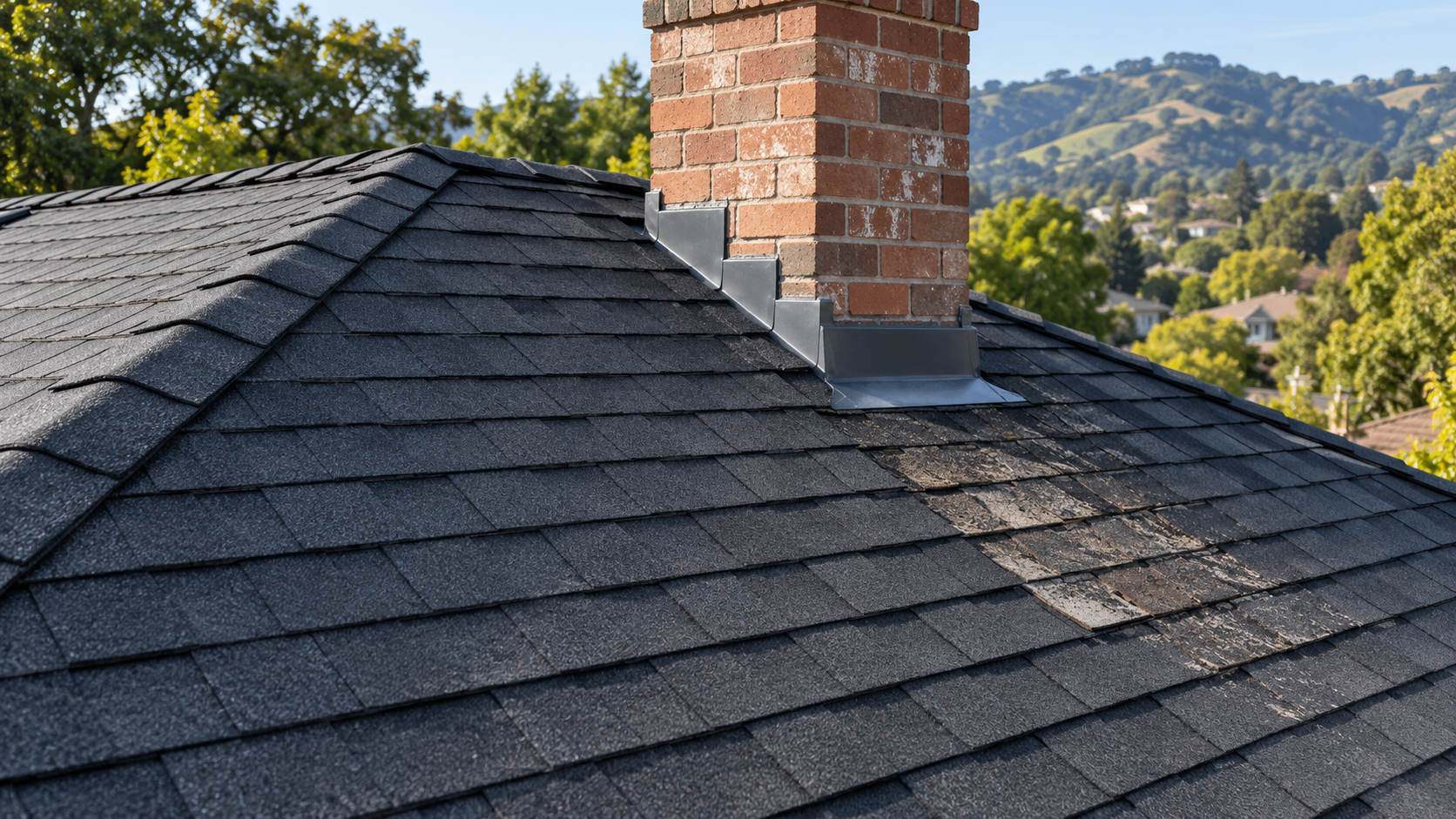
Compare roof repair and replacement in the East Bay. Learn which signs to discuss, what an assessment should cover and how to compare estimates.
Read the guide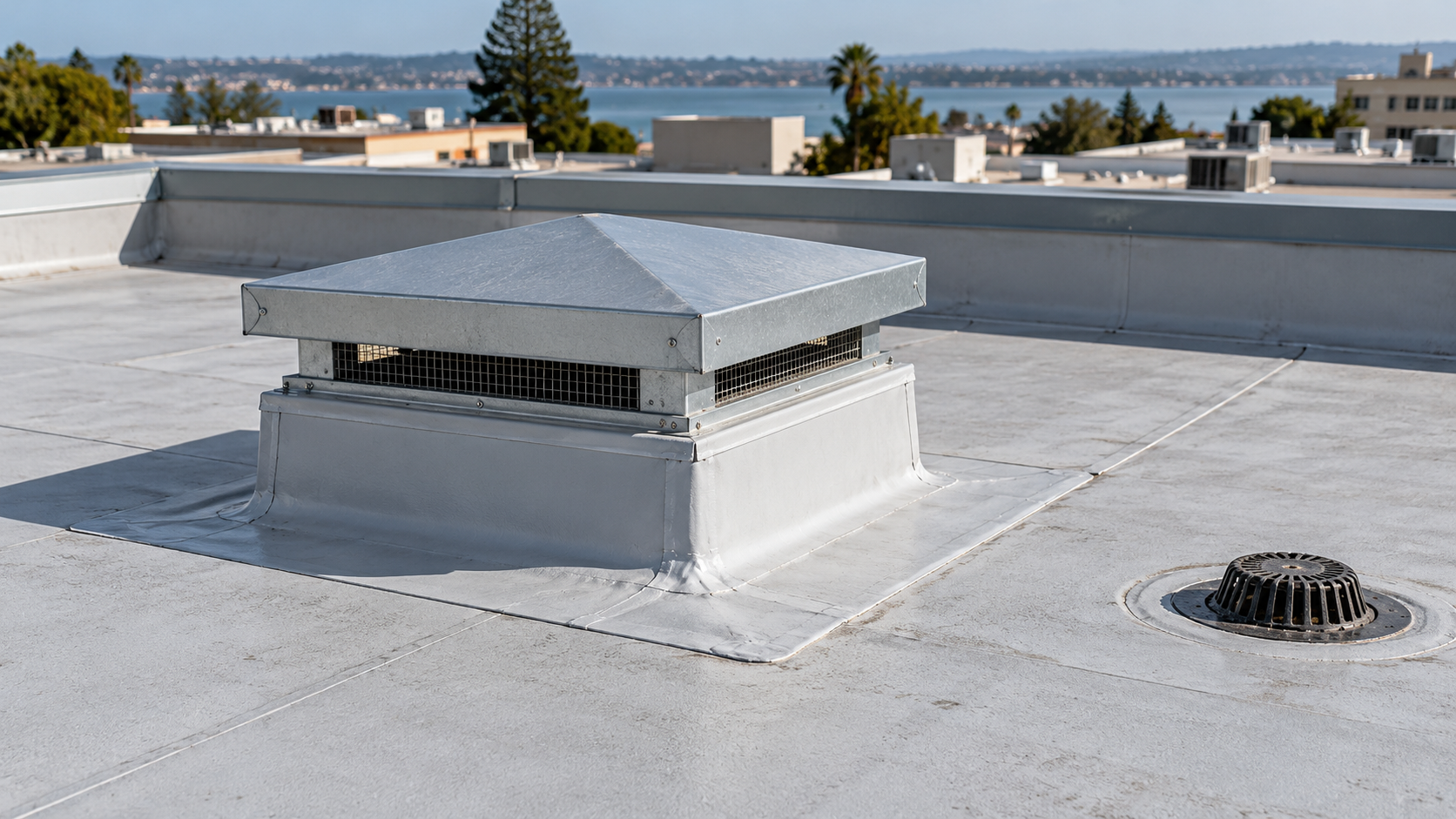
Alameda · Commercial Roofing
What Causes Commercial Roof Leaks in Alameda?
Understand commercial roof leaks in Alameda, including flashing, roof penetrations and drainage concerns, before discussing an assessment and repair scope.
Read the guide
Alameda · Contractor Guide
Alameda Roofing Contractor: How Do I Choose the Best Contractor for Roof Replacement?
Compare Alameda roofing contractors for roof replacement with clear questions about older roof details, written scope, access, materials and homeowner preparation.
Read the guide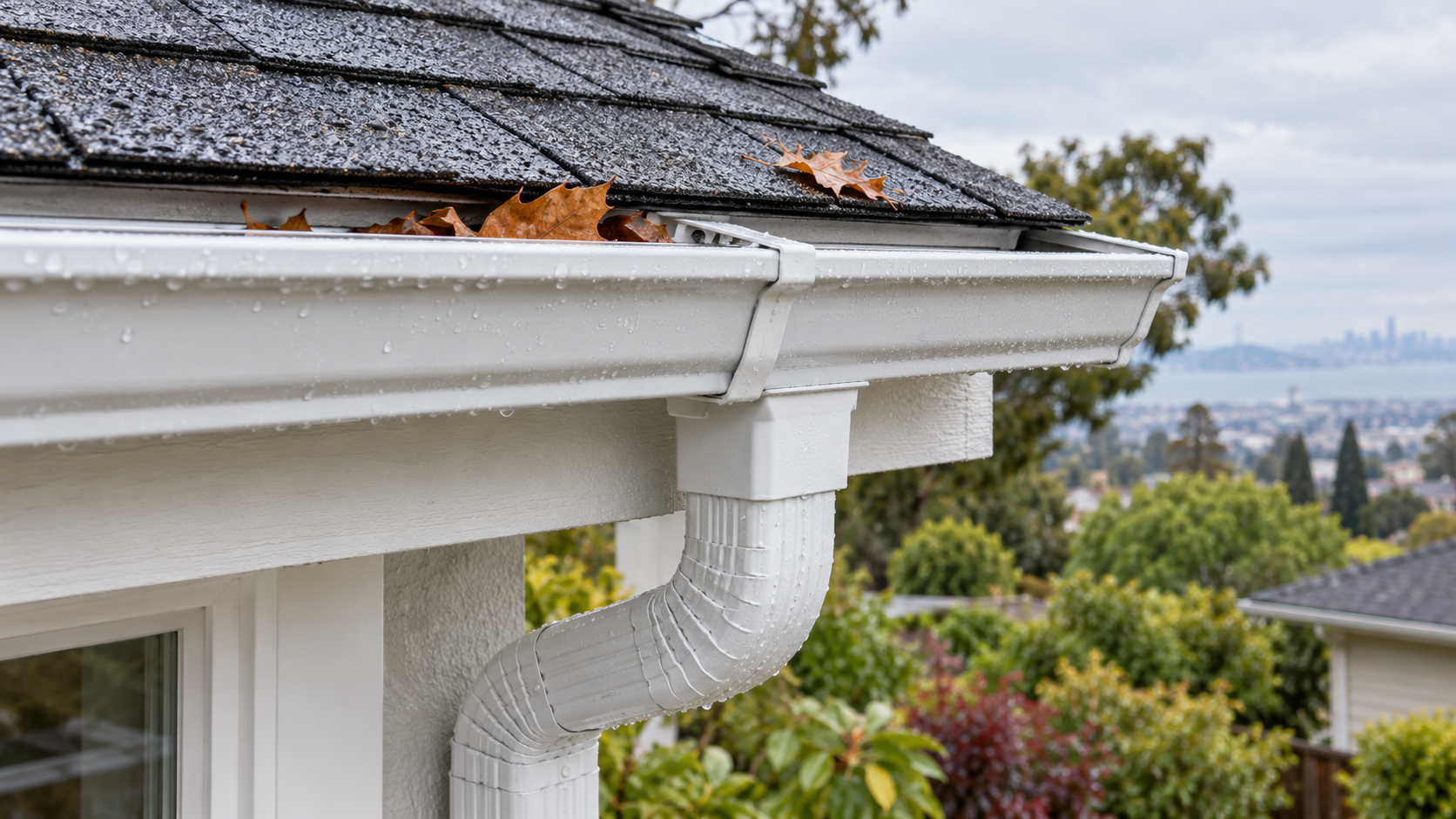
Oakland · Roof Maintenance
How Do I Prepare My Oakland Roof and Gutters for Rain?
Prepare your Oakland roof and gutters for rainy weather. Review visible warning signs, drainage concerns and questions to ask before scheduling maintenance.
Read the guide