
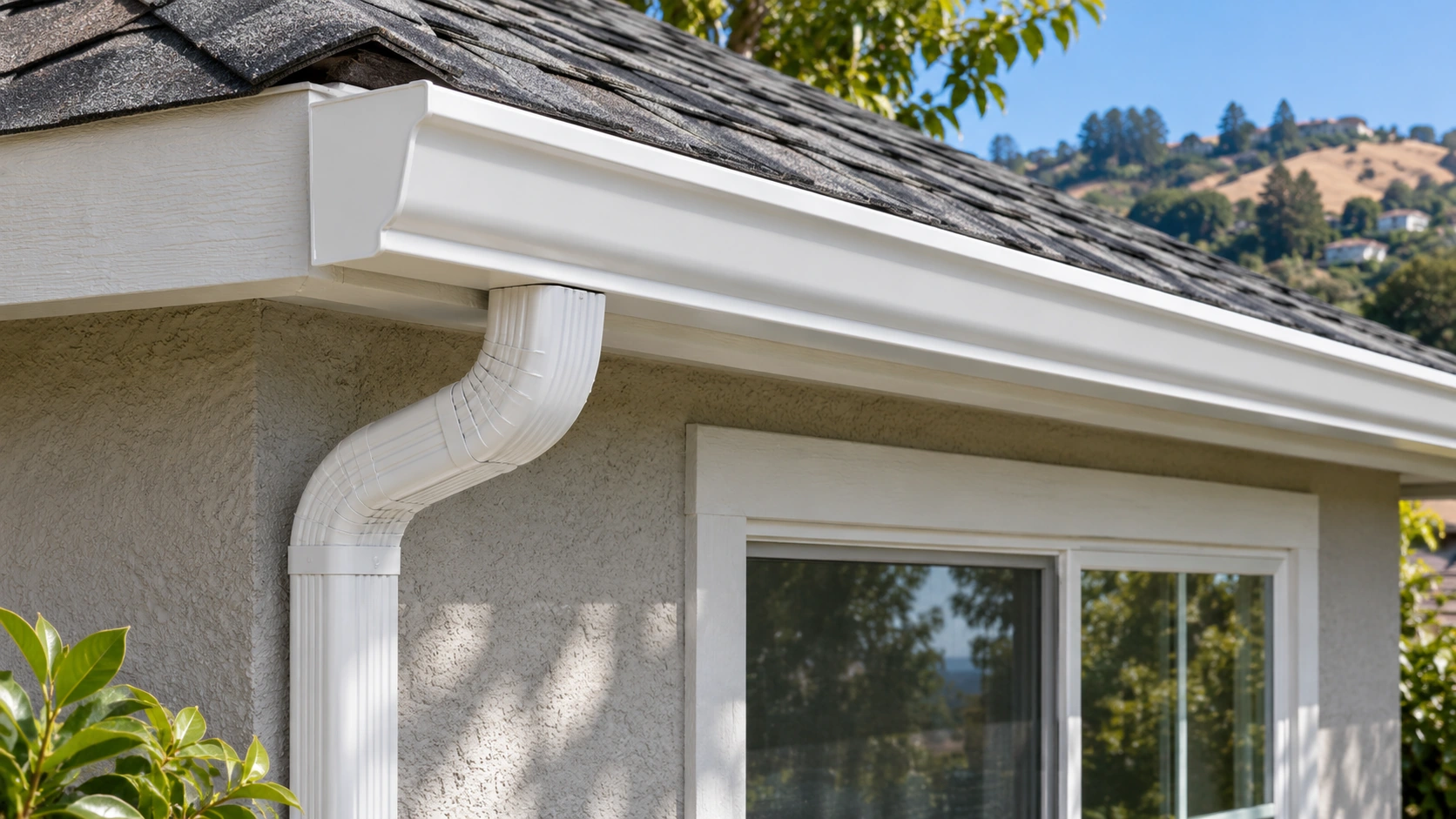
Gutters & Downspouts · Oakland & Alameda & Berkeley & Castro Valley
What is the short answer?
Start with the observed condition
Gutter repair may be appropriate for a localized joint, support or alignment problem when the surrounding system remains serviceable. Replacement may be worth considering when deterioration is widespread or the existing arrangement cannot provide a workable drainage path. The decision should include outlets, downspouts and the roof edge, not just the visible gutter front.
A gutter problem can look dramatic during a storm and almost disappear when the weather clears. The useful repair decision starts with where the water goes, which components are affected and what condition the rest of the system is in. Replacing everything is not automatically the best answer. Repeatedly sealing the same visible drip is not automatically a durable answer either.
Banner Roofing offers gutter repair within its listed East Bay coverage. Explore the service-area directory to confirm your city.
Gutters & Downspouts · Assessment
What gutter symptoms should I describe before requesting an estimate?
Give the location and the behavior of the water
Report whether water drips from a seam, spills over the front edge, runs behind the gutter or collects at a downspout connection. Note whether the issue appears in light rain, only in heavier rain or after the gutter has been receiving runoff for some time. Each observation points to a different part of the drainage path that may need review.
Photograph the affected area from the ground and identify nearby doors, paths or walls receiving water. Do not climb a ladder during rainfall to look inside the gutter. An estimate based on a precise symptom is more useful than an inquiry that simply says the gutters are bad. The contractor can then explain which checks are needed before selecting a repair.
Gutters & Downspouts · Observation
When can a gutter repair make sense?
Look for a limited problem within a serviceable system
A localized joint leak, loose support or a short alignment problem may have a practical repair option. The contractor still needs to assess the surrounding gutter material, attachment surface and connected drainage components. Repairing one seam is less useful if movement continues because the nearby support has not been addressed or if backed-up water keeps loading the same joint.
Ask the contractor to distinguish the visible symptom from the work needed to correct its cause. A limited repair proposal should identify the location, method and conditions assumed to be sound. It can be sensible to retain a serviceable system, but the decision should follow its condition rather than an assumption that every isolated drip is automatically a simple sealing job.
Gutters & Downspouts · Service options
When should I consider replacing the gutters?
Ask what the existing system cannot reasonably provide
Replacement may be worth discussing if corrosion, repeated failures or damaged material affect multiple areas. It may also be relevant where the current gutter layout, outlets or downspouts cannot provide a workable route for the runoff being collected. Ask which finding supports replacement and whether the issue can be corrected through a more limited change.
Compare proposals by the system they describe. New gutters connected to a problematic downspout or an unresolved discharge point may leave an important part of the drainage issue in place. A replacement estimate should explain what happens at corners, end caps, outlets and downspout connections. Confirm which existing components will remain and whether their condition has been considered.
| Observation | Question to ask | Important distinction |
|---|---|---|
| One affected seam | Local joint and support assessment | Confirm the surrounding material is serviceable |
| Sagging section | Support, alignment and fascia assessment | New fasteners do not repair unsound fascia |
| Overflow | Collection, outlet and downstream assessment | Bigger gutters are not a universal answer |
| Widespread deterioration | Compare repair and replacement scopes | State what happens to retained downspouts |
Gutters & Downspouts · Repair scope
Does overflow mean my gutters are too small?
Investigate the flow path before choosing size
Overflow can have several explanations, including an obstruction, an outlet problem, a low section or runoff entering at a concentrated location. A gutter that appears clear from the ground has not necessarily had its outlet or downspout assessed. Describe where overflow starts and whether water exits the downspout at the same time. Those details help organize the assessment.
If changing gutter size or adding outlets is proposed, ask how the contractor reached that recommendation and how the revised system will connect downstream. A generic larger-is-better answer is not a property-specific drainage plan. Roof shape, collection area, outlet arrangement and site discharge need to be considered together by the appropriate professionals.
Gutters & Downspouts · Planning
Why do fascia and roof-edge conditions matter?
A gutter needs a sound connection to the building
Loose or sagging gutters can involve the attachment or the surface supporting it. Ask whether the fascia and related roof-edge details appear serviceable and what remains hidden until work begins. New fasteners are not a complete solution if the supporting material cannot hold them appropriately. A clear proposal should identify whether building repairs are included or a separate scope.
Water behind a gutter also deserves a separate explanation from water spilling over its front. Ask how the roof edge directs runoff into the gutter and whether a nearby wall transition is relevant. Do not assume all staining on the fascia comes from a leaking gutter seam. The correct scope depends on where the water actually travels.
Gutters & Downspouts · Follow-up
How should downspouts and discharge be included in the estimate?
Follow runoff beyond the bottom elbow
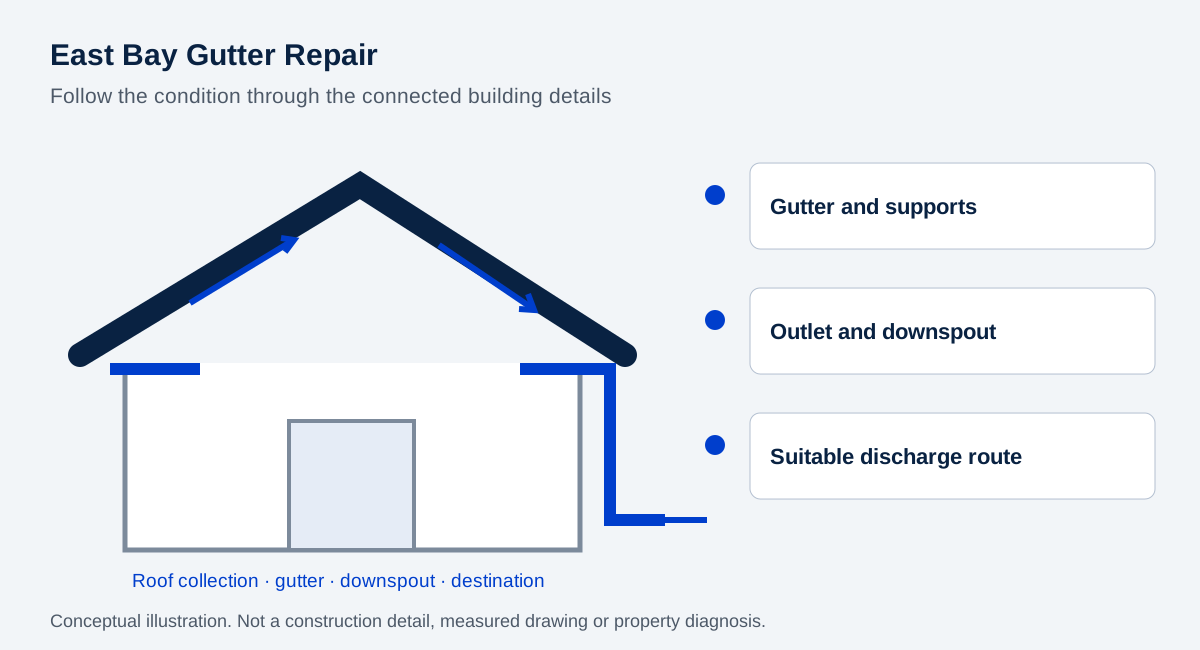
A gutter system needs a continuous route from roof edge to a suitable discharge point. Ask what the outlet connects to, whether the downspout is serviceable and where the water goes after leaving it. If a downspout enters a buried pipe, the visible connection does not establish that the underground route is clear or suitable.
Confirm whether the work includes downspout repair, new downspouts or only gutter work. Site drainage, underground piping and changes affecting neighboring property may need a separate professional assessment. Do not accept moving the outlet toward a doorway, public path or property boundary as a complete solution without considering the consequences and applicable requirements.
Gutters & Downspouts · Next steps
What should I compare in written gutter proposals?
Use a component-by-component scope
Compare the gutter runs affected, corners and joints included, support work, outlet changes and the downspouts that remain or will be replaced. Ask how hidden fascia damage would be handled if discovered. Confirm whether removal, disposal and cleanup are included. A total price is difficult to compare when the underlying lists of work are different.
After the agreed work, ask what observation or follow-up is appropriate and record whether the original symptom returns. Gutters still need care suited to the property and surrounding vegetation. Keep this guide as the decision overview and use the linked city articles for seam leaks, overflow, sagging and runoff routing. That gives each problem a more focused conversation.
Gutters & Downspouts · Planning example
How can I compare a repair estimate with a replacement estimate?
Compare what the property receives
Imagine one East Bay proposal repairing a leaking corner and correcting a nearby support, while a second replaces several gutter runs and retains the existing downspouts. The second is larger, but that alone does not establish a better drainage outcome. Ask why each component is being retained or changed and which finding supports the repair boundary.
Make a shared comparison list: affected runs, joints, supports, fascia work, outlets, downspouts and discharge connections. Mark included, excluded or not yet assessed beside each item. A missing line is a question to resolve before agreement. This simple comparison is more useful than choosing between the labels repair and replacement as though each described a fixed package of work.
Gutters & Downspouts · Key takeaways
What should I take away before requesting help?
Keep the request specific to your property
East Bay service coverage is not a diagnosis. An Oakland house with an active interior drip, an Alameda home with displaced shingles and a Castro Valley property with runoff concerns can need very different scopes. Use the city guides to find the appropriate local service path, then make the estimate about the observed conditions on your own property.
This pillar connects the four focused homeowner questions below. Oakland Gutter Repair: Why Are My Gutters Leaking at the Seams?; Berkeley Gutter Repair: Why Do My Gutters Overflow Even When They Look Clear?; Alameda Gutter Repair: Can Sagging Gutters Be Fixed Without Replacing the Entire System?; Castro Valley Downspout Installation: Where Should My Downspouts Direct Roof Runoff?.
When you contact Banner Roofing, describe the observed condition and ask what the initial assessment includes. Call 510.895.4433 or request a roofing estimate. Mike handles your estimate. Confirm availability, proposed work and any separate investigation directly; this guide does not promise an arrival time or diagnose a property from its city name.
Gutters & Downspouts · Questions & Answers
East Bay Gutter & Downspout Questions
Can one leaking corner be repaired without replacing every gutter?
Possibly, if the joint, neighboring material and supports can accept a suitable repair. An assessment should establish the cause and condition first.
Do seamless gutters have no joints at all?
A system can still have corners, end caps and outlets even where the main runs are seamless. Ask which connections are included in a repair or replacement scope.
Should gutters and downspouts always be replaced together?
Not automatically. Ask which components remain serviceable and whether the proposed arrangement provides a continuous, workable drainage path.
Is a clear-looking gutter necessarily working correctly?
No. Appearance from the ground cannot establish outlet condition, alignment or downspout performance. Describe runoff behavior as well as appearance.
Can Banner Roofing assess East Bay gutter work?
Contact Banner Roofing to discuss gutter repair, installation and downspout services for a property in its listed East Bay service area.
Related Roofing Guides
Oakland · Gutter & Downspout Advice
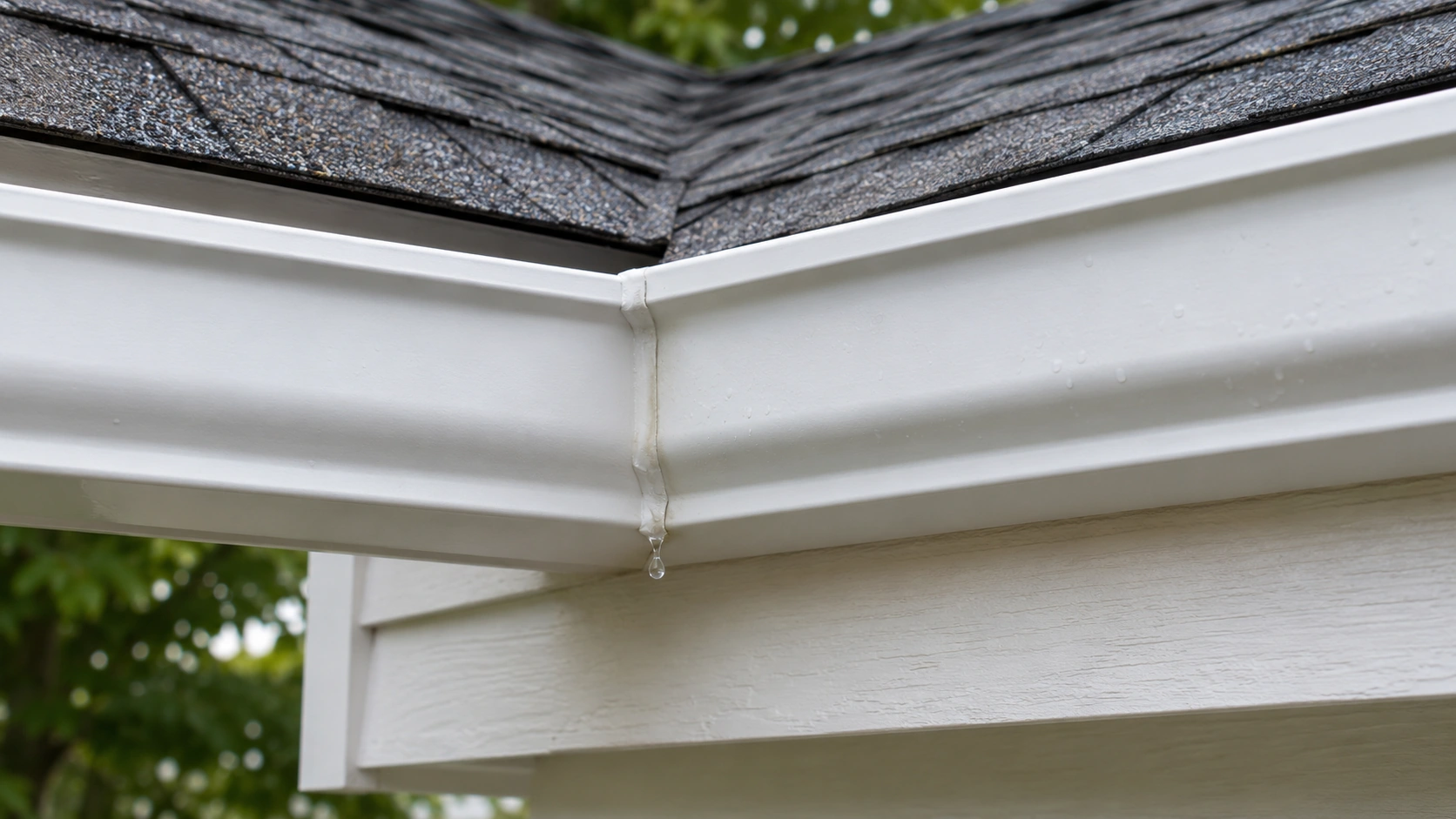
Oakland Gutter Repair: Why Are My Gutters Leaking at the Seams?
Leaking gutter seams on an Oakland home may involve more than old sealant. Learn what joint movement, support and water backup mean for repairs.
Read the guide
Berkeley · Gutter & Downspout Advice
Berkeley Gutter Repair: Why Do My Gutters Overflow Even When They Look Clear?
Clear-looking gutters can still overflow. Learn what Berkeley homeowners should report about outlets, downspouts, alignment and concentrated roof runoff.
Read the guide
Alameda · Gutter & Downspout Advice
Alameda Gutter Repair: Can Sagging Gutters Be Fixed Without Replacing the Entire System?
Sagging gutters on an Alameda home may need support, fascia or alignment work. Learn what determines whether repair or replacement is appropriate.
Read the guide
Castro Valley · Gutter & Downspout Advice
Castro Valley Downspout Installation: Where Should My Downspouts Direct Roof Runoff?
Plan downspout installation in Castro Valley around the full runoff path, including outlets, walkways, foundations and any existing drainage connections.
Read the guide