
Gutters & Downspouts · Alameda
What is the short answer?
Start with the observed condition
A sagging gutter may be repairable if the gutter material and attachment surface remain sound and support or alignment can be restored appropriately. Deteriorated fascia, damaged gutter sections or wider system problems can change the scope. The assessment should identify why the section moved before simply adding fasteners.
A bowed gutter line is a visible problem, but its cause may lie in more than the gutter itself. On an Alameda home, the repair decision should include the attachment, supporting fascia and connected drainage path. A homeowner does not need to decide which component failed before requesting help. The important first step is describing where the sag appears and whether runoff behavior has changed.
Banner Roofing offers gutter repair within its listed East Bay coverage. The Alameda roofing contractor guide explains how to compare the service fit and written scope.
Gutters & Downspouts · Assessment
What does gutter sagging look like from the ground?
Compare the gutter with nearby fixed lines
A localized dip, separation from the fascia or a changed relationship to the roof edge can be worth reporting. Photographs from a consistent ground-level position help show the area. Perspective can distort long roof lines, so describe the apparent change rather than assuming a photograph proves the exact amount of movement.
Also note water spilling near the low area, a joint that has started dripping or a downspout connection that looks displaced. These observations may be relevant to the same section, but they should be listed separately. Do not pull on the gutter, climb a ladder during rain or use the system as a support while trying to judge its condition.
Gutters & Downspouts · Observation
Why should supports and fascia be assessed together?
The attachment is only as useful as its supporting material
A gutter must be held appropriately at the building edge. A loose support is a different finding from deterioration in the material it attaches to. Ask whether the fascia appears serviceable and which parts will remain concealed until work begins. The repair plan should not assume that a new fastener alone resolves an uncertain supporting condition.
If building material repairs may be necessary, ask whether they are included and how additional findings will be approved. A clear boundary between gutter work and related carpentry makes the estimate easier to compare. It also prevents the visual straightening of the gutter from being mistaken for a complete explanation of why it moved.
Gutters & Downspouts · Service options
Can a sagging section be realigned instead of replaced?
Assess whether the existing material can be retained
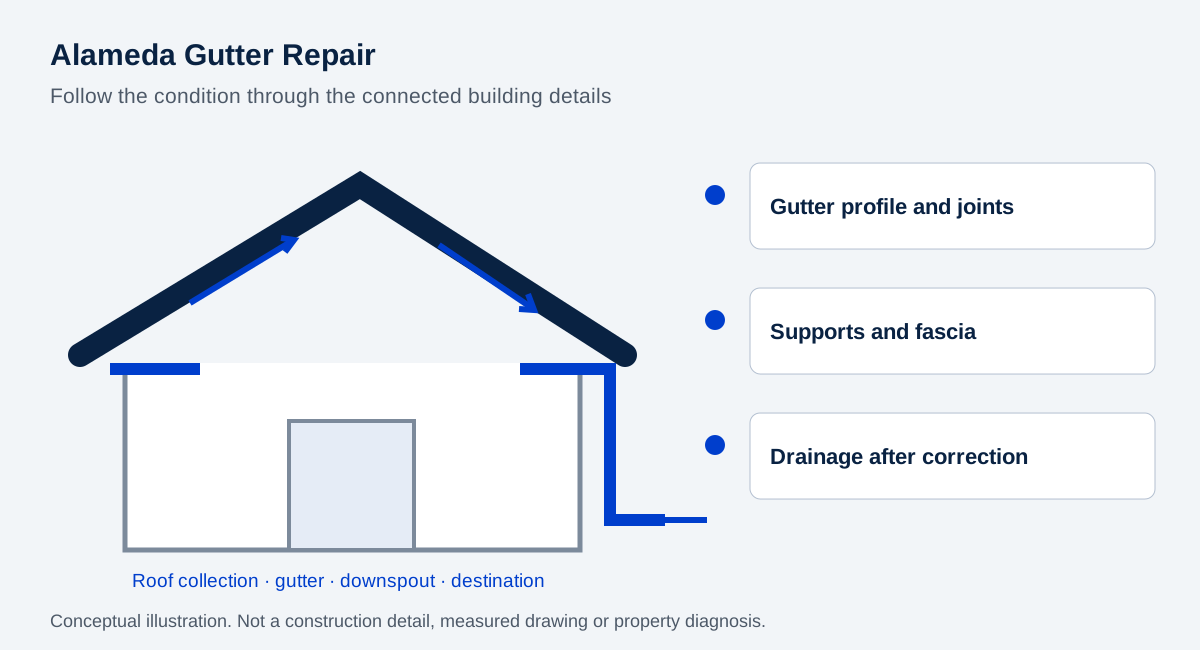
Realignment or support correction may be practical if the existing gutter remains serviceable and can be restored as part of a sound drainage arrangement. Ask what the contractor has observed about the gutter shape, joints and attachment. A retained section should still direct runoff toward its outlet appropriately; looking straighter is not the only intended outcome.
If the gutter is damaged or the affected area extends through several connections, a section replacement may be more appropriate. Ask what supports that recommendation and how the new section will connect with retained components. There may be options between a small adjustment and replacing every gutter on the house. The condition should determine that boundary.
| Observation | Question to ask | Important distinction |
|---|---|---|
| A localized dip | Review alignment and supports | Do not test by pulling on the gutter |
| Loose attachment | Assess the supporting surface | Extra fasteners may not resolve deterioration |
| Distorted gutter material | Ask whether a section can be retained | A neat exterior does not establish serviceability |
| Overflow near sag | Review runoff and outlet connection | Movement and drainage need separate findings |
Gutters & Downspouts · Repair scope
How can sagging affect gutter drainage?
Ask how water moves through the affected run
A low area can change where water accumulates or spills, but the contractor needs to relate the observed line to actual drainage behavior. Report whether overflow starts at the dip and whether the outlet is receiving water. Do not assume that a sag explains every wet wall or interior stain nearby without a separate assessment of those symptoms.
Ask whether the proposed correction includes checking adjoining joints, outlet position and the downspout connection. Moving a section can affect how those components meet. A repair that treats the run as part of a connected system is easier to evaluate than one focused entirely on its appearance from the street.
Gutters & Downspouts · Planning
What should an Alameda sagging gutter estimate specify?
List the retained and replaced components
Ask for the location of the affected run, support work, alignment correction and any gutter section replacement. Confirm whether fascia assessment or repair is included and what happens if concealed deterioration is found. If the downspout or corner needs adjustment, it should be identified rather than assumed part of an unspecified gutter repair.
Keep appearance expectations separate from drainage expectations. Existing material can have weathering or profile differences even after a practical repair. Ask how visible differences will be handled and what limitations remain. Written clarity is particularly useful when you are comparing a repair estimate with a proposal for a larger replacement project.
Gutters & Downspouts · Follow-up
What follow-up matters after a sagging gutter repair?
Observe the same area without testing it physically
From the ground, look for a return of the visible dip or new separation and note runoff behavior during later rain when it is safe to do so. Do not hang weight on the gutter or pull it to test the attachment. The contractor should explain what observation or follow-up is appropriate after the agreed work.
Continue care suited to the surrounding vegetation and property conditions, and report renewed movement or overflow promptly. Keep earlier photos so changes can be compared with the same view. If water still gathers near the house after the gutter correction, ask whether the discharge route or site condition needs separate review rather than repeating the same support repair without new findings.
Gutters & Downspouts · Planning example
How do I compare straightening a gutter with repairing its support?
Ask what is being restored
A hypothetical Alameda estimate could offer to straighten a dipped run, while another includes work at the attachment surface and neighboring joint. Ask what each contractor observed about the gutter and fascia. The proposals may differ because they assume different conditions, not because one company is simply charging more for the same task.
Clarify whether the repair restores appearance, attachment and the intended water route, or only one of those outcomes. Ask how concealed deterioration would be handled if found. A useful proposal defines the supported work without guaranteeing the condition of materials that have not been exposed. Keep the written explanation with your original photographs for later comparison.
Gutters & Downspouts · Key takeaways
What should I take away before requesting help?
Keep the request specific to your property
For your Alameda home, share the roof material, earlier work and any access arrangements before the visit. Do not assume that nearby houses or a similar architectural style establish the condition of your roof or gutters. The estimate should explain the components on your property and the findings that support the proposed work.
For the wider decision, read East Bay Gutter Repair: How Do I Know Whether My Gutters Need Repair or Replacement?. East Bay Gutter Repair: How Do I Know Whether My Gutters Need Repair or Replacement?; Oakland Gutter Repair: Why Are My Gutters Leaking at the Seams?; Berkeley Gutter Repair: Why Do My Gutters Overflow Even When They Look Clear?; Castro Valley Downspout Installation: Where Should My Downspouts Direct Roof Runoff?.
When you contact Banner Roofing, describe the observed condition and ask what the initial assessment includes. Call 510.895.4433 or request a roofing estimate. Mike handles your estimate. Confirm availability, proposed work and any separate investigation directly; this guide does not promise an arrival time or diagnose a property from its city name.
Gutters & Downspouts · Questions & Answers
Alameda Gutter & Downspout Questions
Do sagging gutters always need replacement?
No. A limited support or alignment correction may be feasible if the gutter and supporting material are serviceable. An assessment establishes the scope.
Can new fasteners fix deteriorated fascia?
Fasteners alone do not restore unsound supporting material. Ask whether related building repairs are needed and included.
Is a gutter meant to be perfectly level?
The contractor should assess the arrangement needed to move water toward the outlet. Appearance alone does not establish correct drainage.
Can only one section be replaced?
Possibly, depending on material condition and how the replacement joins adjacent sections, corners and outlets.
Should I report water overflowing at the sag?
Yes. Describe the location and timing so the contractor can assess movement and drainage behavior together.
Related Roofing Guides
East Bay · Gutter & Downspout Advice
East Bay Gutter Repair: How Do I Know Whether My Gutters Need Repair or Replacement?
Compare gutter repair and replacement for East Bay homes. Learn what leaking seams, sagging sections and overflow mean for a practical written scope.
Read the guide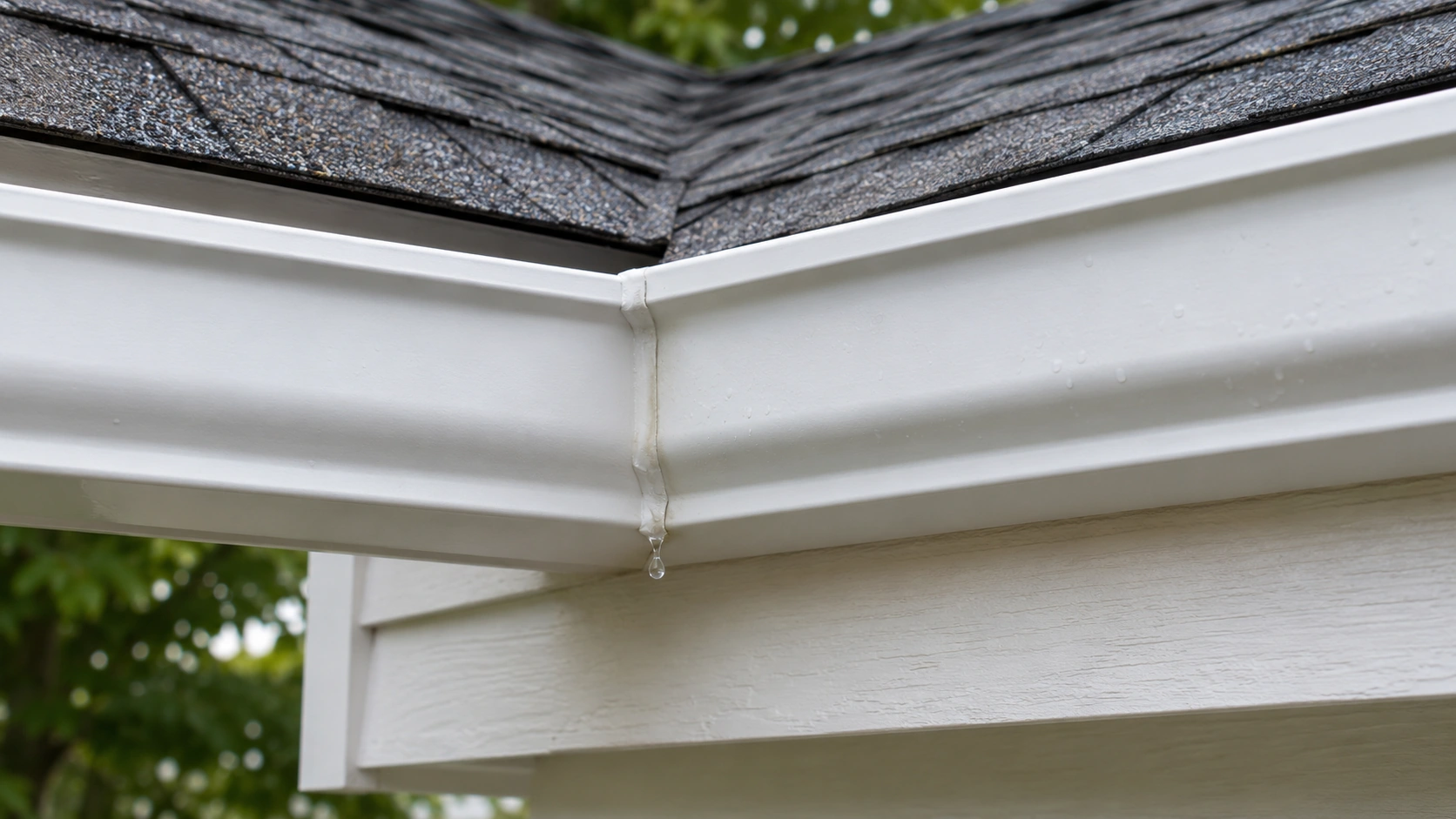
Oakland · Gutter & Downspout Advice
Oakland Gutter Repair: Why Are My Gutters Leaking at the Seams?
Leaking gutter seams on an Oakland home may involve more than old sealant. Learn what joint movement, support and water backup mean for repairs.
Read the guide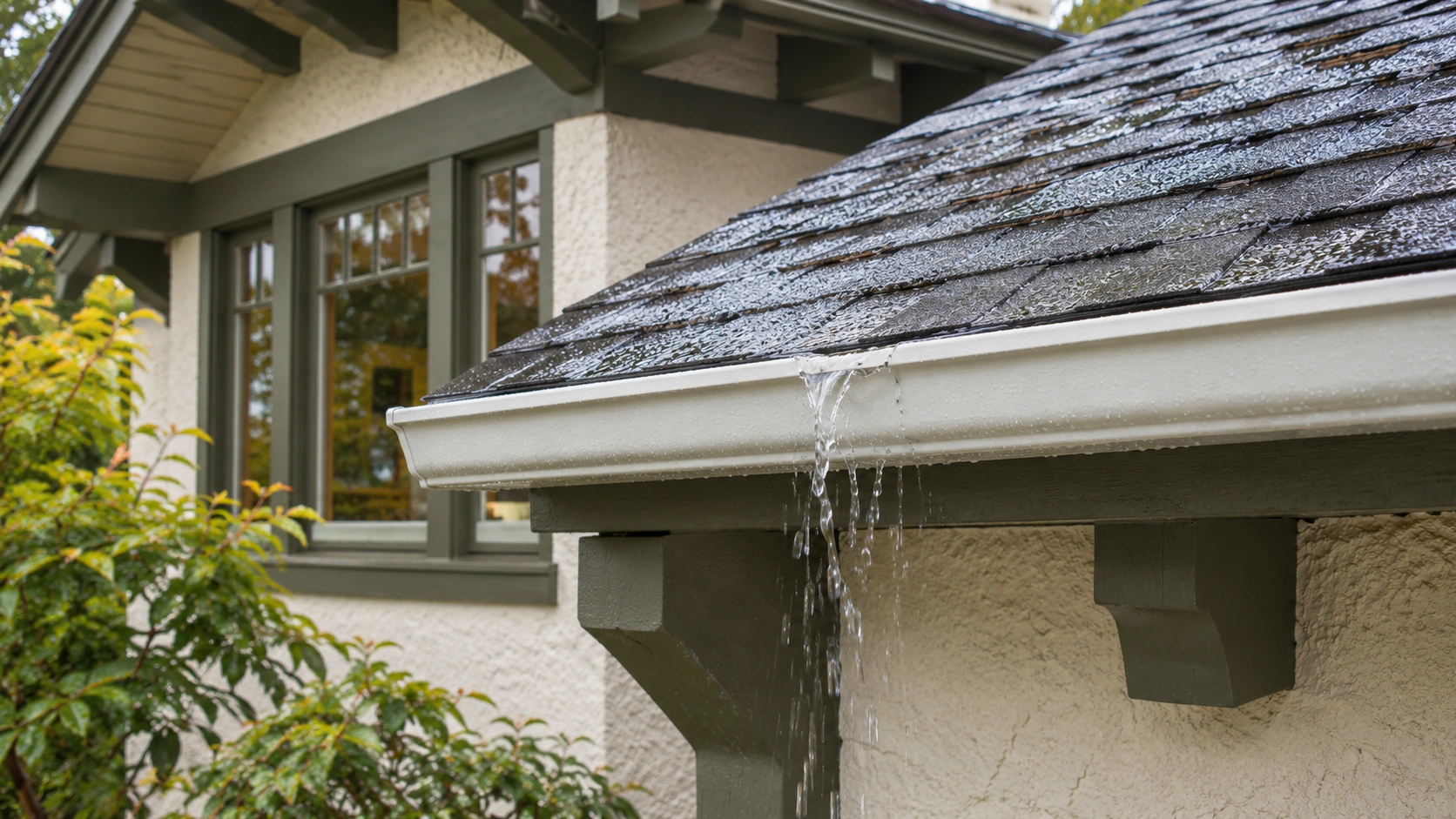
Berkeley · Gutter & Downspout Advice
Berkeley Gutter Repair: Why Do My Gutters Overflow Even When They Look Clear?
Clear-looking gutters can still overflow. Learn what Berkeley homeowners should report about outlets, downspouts, alignment and concentrated roof runoff.
Read the guide
Castro Valley · Gutter & Downspout Advice
Castro Valley Downspout Installation: Where Should My Downspouts Direct Roof Runoff?
Plan downspout installation in Castro Valley around the full runoff path, including outlets, walkways, foundations and any existing drainage connections.
Read the guide