
Gutter repair · Hayward
What is the short answer?
Make the decision about your own roof drainage
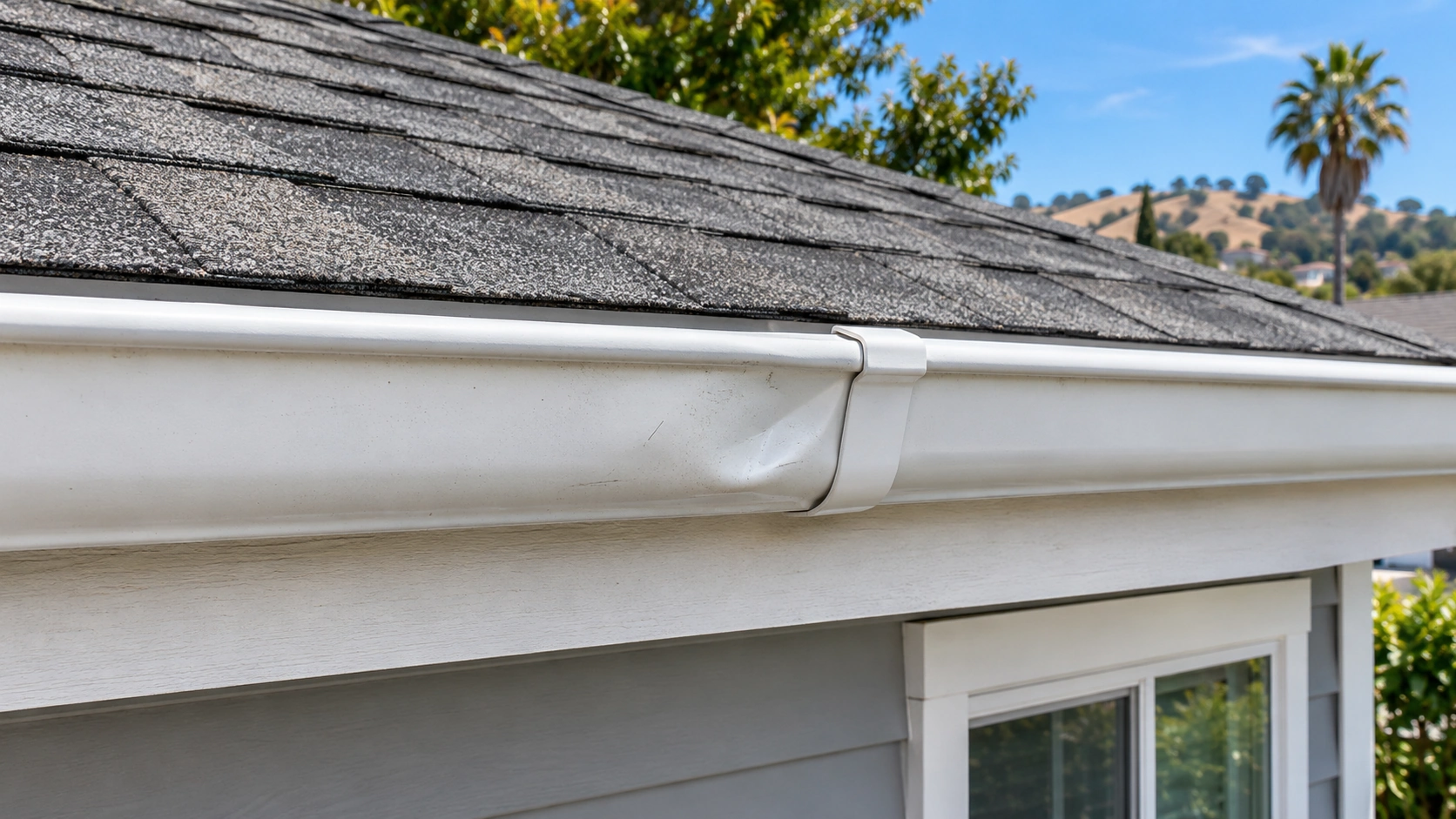
One damaged gutter section may be replaced without replacing the entire system when adjoining material, compatible connections and supporting surfaces remain suitable. The repair estimate should define the section, both connection boundaries and any related work needed to address the cause.
A single damaged area raises a reasonable question: how much of the system really needs to change? The answer depends on the condition around the damage and the ability to connect a replacement properly, not only on how short the affected section looks.
Explore Banner’s gutter repair service and the Hayward roofing contractor guide. Ask for an assessment that separates the damaged area from the condition of the whole run.
Gutter repair · Start with sound boundaries
What makes a partial gutter repair practical?
Start with sound boundaries
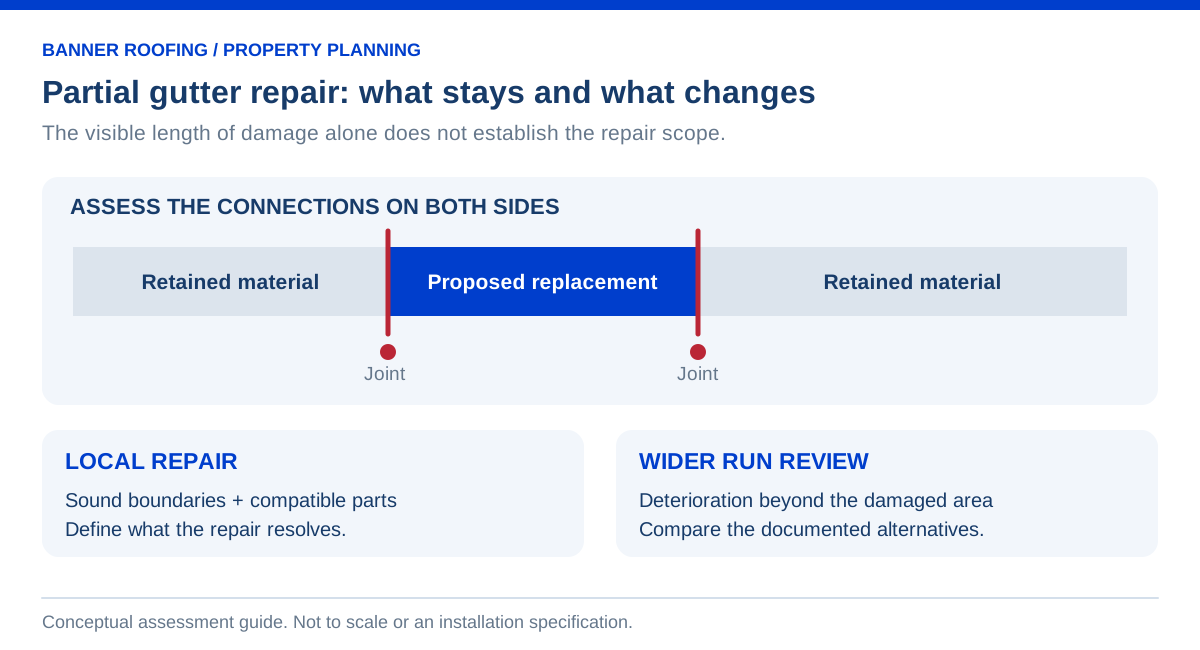
A localized repair needs suitable places to connect the replacement to retained components. Ask the contractor to identify those boundaries and explain why the adjoining material can remain. A short visible problem is not automatically a small repair if the surrounding section is also deteriorated.
Describe what caused the damage if known: an impact, a tree branch, movement at an attachment or work nearby. These histories can lead to different assessment questions. If the cause has not been established, avoid calling it a simple dent before the connected area has been reviewed.
Ask whether the recommendation is limited to a section, a complete run or a wider system. Those are different scopes. Understanding the boundary helps you compare proposals without treating a full replacement as the only alternative to another patch.
Gutter repair · A replacement has to meet what stays
Why do matching profiles and connections matter?
A replacement has to meet what stays
A new gutter piece must relate to the shape and connection arrangement of the retained system. The outward face may look similar while the joint details differ. Ask whether a compatible replacement and its required fittings can be supplied for the existing profile.
Material compatibility belongs in the discussion too. The contractor should identify the proposed material and how it connects to the existing components, rather than treating every metal-looking gutter as interchangeable. Ask about finish differences separately; a repair can be compatible yet remain visible because old material has weathered.
When the exact original product is unknown, ask how the contractor will establish a suitable solution. That uncertainty may affect the scope. A clear explanation is better than assuming a perfect match will be available after the damaged section has already been removed.
| Part of the decision | Ask the contractor | Why it matters |
|---|---|---|
| Replacement section | Can the profile and fittings connect suitably? | Defines whether a local repair is practical |
| Adjoining material | What condition allows it to stay? | Sets the repair boundaries |
| Supports and fascia | Is the supporting surface suitable? | Separates the cause from the visible symptom |
| Outlet relationship | Will the repair affect the connected downspout? | Keeps the runoff route coordinated |
Gutter repair · Review supports and the roof edge
What should be checked beside the damaged section?
Review supports and the roof edge
Ask about the attachments and supporting surface along the proposed repair area. If a gutter has moved, the replacement needs more than a straight new face. The assessment should explain whether the surrounding support is suitable and whether movement or deterioration remains to be addressed.
The adjacent roof edge also matters when defining access and connections. Ask whether the proposed work affects any existing roof-edge component and whether that work is included. Do not assume a gutter repair includes roofing or fascia repairs simply because they are next to one another.
Keep concealed findings manageable through a written change process. If opening the repair area reveals more deterioration, ask how you will receive the findings and options before extra work proceeds. This is a practical way to keep a limited repair from turning into an unclear commitment.
Gutter repair · Check the run and outlet together
Could a local repair change the drainage behavior?
Check the run and outlet together
Ask how the repaired area will align with the retained run and the outlet it serves. A new section should be considered within the connected arrangement, especially if the original symptom included overflow or water collecting in one part of the gutter.
Describe what you observed during rain, including the exact spill location and whether it happened before or after the damage appeared. That sequence helps separate damage-related concerns from an older collection or outlet issue. A new piece of material does not automatically explain every symptom along the same eave.
Department of Energy guidance considers gutters and downspouts together in roof-runoff management. For a partial repair, the practical question is whether the proposed work preserves a suitable connected route and clearly identifies concerns beyond the repair boundary.
Gutter repair · Compare the remaining condition
When is replacing a whole gutter run worth considering?
Compare the remaining condition
A wider replacement may deserve discussion when deterioration extends beyond the visible damage, a compatible local connection is impractical or the existing run has several related problems. Ask the contractor to show the findings supporting the wider recommendation.
Compare the reasonable alternatives in writing. A partial repair may retain more of the existing system, while a complete run replacement may remove several uncertain boundaries. Neither choice is automatically right; the decision should account for condition, scope and what you want the project to achieve.
A whole run is still different from every gutter on the house. Ask whether other roof edges remain serviceable and why. This distinction prevents a localized problem from being used as an unexplained reason to replace unrelated components.
Gutter repair · Make the comparison specific
What should a Hayward gutter repair quote include?
Make the comparison specific
Look for the repair location, affected length or clearly defined boundaries, proposed material, connection work, support assessment, removal and cleanup. Ask how the outlet and any nearby downspout are handled. These details make the proposal understandable even if you do not know the original gutter manufacturer.
Ask about appearance expectations before accepting the work. A new finish may stand out beside older material, and a local repair can introduce visible connection details. Decide what matters to you and request an explanation of the available options rather than assuming the repair will be visually undetectable.
Keep the completion record and any approved changes. If the same area needs attention later, that record can help distinguish the repaired section from retained parts. A useful repair is easier to manage when its boundaries remain clear after the crew leaves.
Gutter repair · Describe the problem without choosing the solution
What should I tell Banner before the assessment?
Describe the problem without choosing the solution
Share the Hayward address and identify which side of the house is affected. Include a wider ground-level view, the damaged area and nearby corners or downspouts. Tell Banner whether you have noticed overflow, movement or earlier repairs in the same location.
The East Bay gutter repair or replacement guide can help you compare a localized repair with a wider scope. Use it to prepare questions, while leaving the final repair boundary to the property assessment. Mention any planned roofing work that could affect access or sequencing.
Request a gutter repair assessment or call 510.895.4433. Ask for a defined recommendation: what can stay, what should change and what separate concerns remain outside the proposed work.
Gutter repair · Questions & Answers
Hayward Gutter Repair Questions
Can a roofer replace only part of my gutter system?
A local replacement may be practical if suitable material, connections and supports are available. Ask the contractor to identify both ends of the repair and explain the condition of the parts being retained.
Will a new gutter section match the old color?
It may look different because the existing finish has weathered or the original product is unavailable. Ask about samples and appearance expectations before approving the repair. A compatible connection and a perfect color match are separate questions.
Does one damaged section mean all gutters are worn out?
No. The damage needs an assessment, but unrelated roof edges may remain serviceable. Ask for the findings behind any recommendation to expand the work beyond the affected section or run.
Can a partial repair fix recurring overflow?
It depends on the cause. If collection, alignment, the outlet or another component is involved, replacing the visibly damaged piece alone may leave part of the problem unresolved. Describe the overflow history during the estimate request.
What should I compare between partial and full-run replacement quotes?
Compare the boundaries, retained components, new connections, support work, outlet handling and exclusions. Ask what each option is expected to resolve. The total price alone does not show whether both proposals cover the same problem.
Related Roofing Guides

Hayward · Contractor Guide
Hayward Roofing Contractor: How Do I Choose the Best Contractor for Gutter Repairs?
Choose a Hayward roofing contractor for gutter repairs by comparing the cause, affected components, roof-edge connections and written repair scope.
Read the guide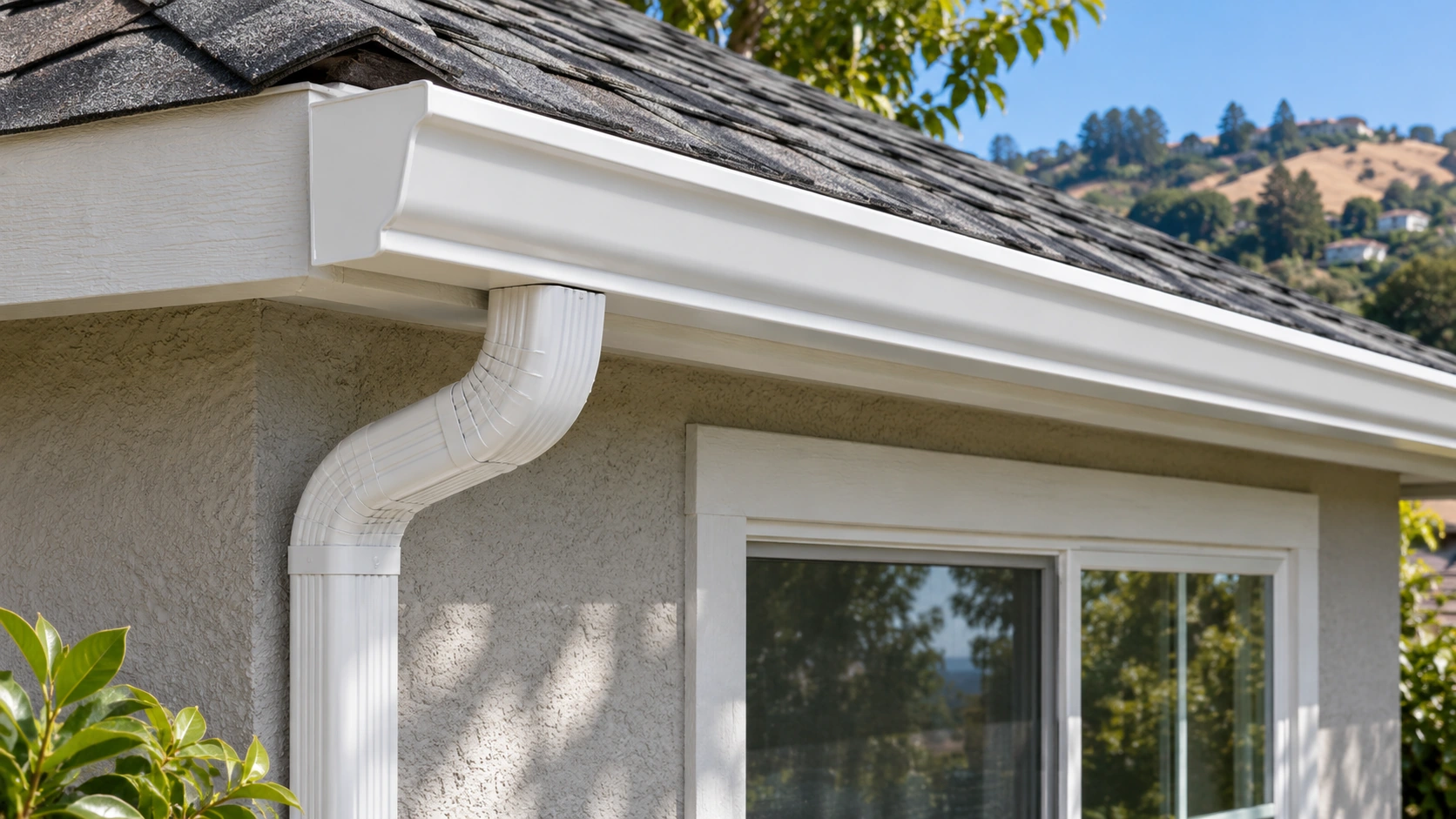
East Bay · Gutter & Downspout Advice
East Bay Gutter Repair: How Do I Know Whether My Gutters Need Repair or Replacement?
Compare gutter repair and replacement for East Bay homes. Learn what leaking seams, sagging sections and overflow mean for a practical written scope.
Read the guide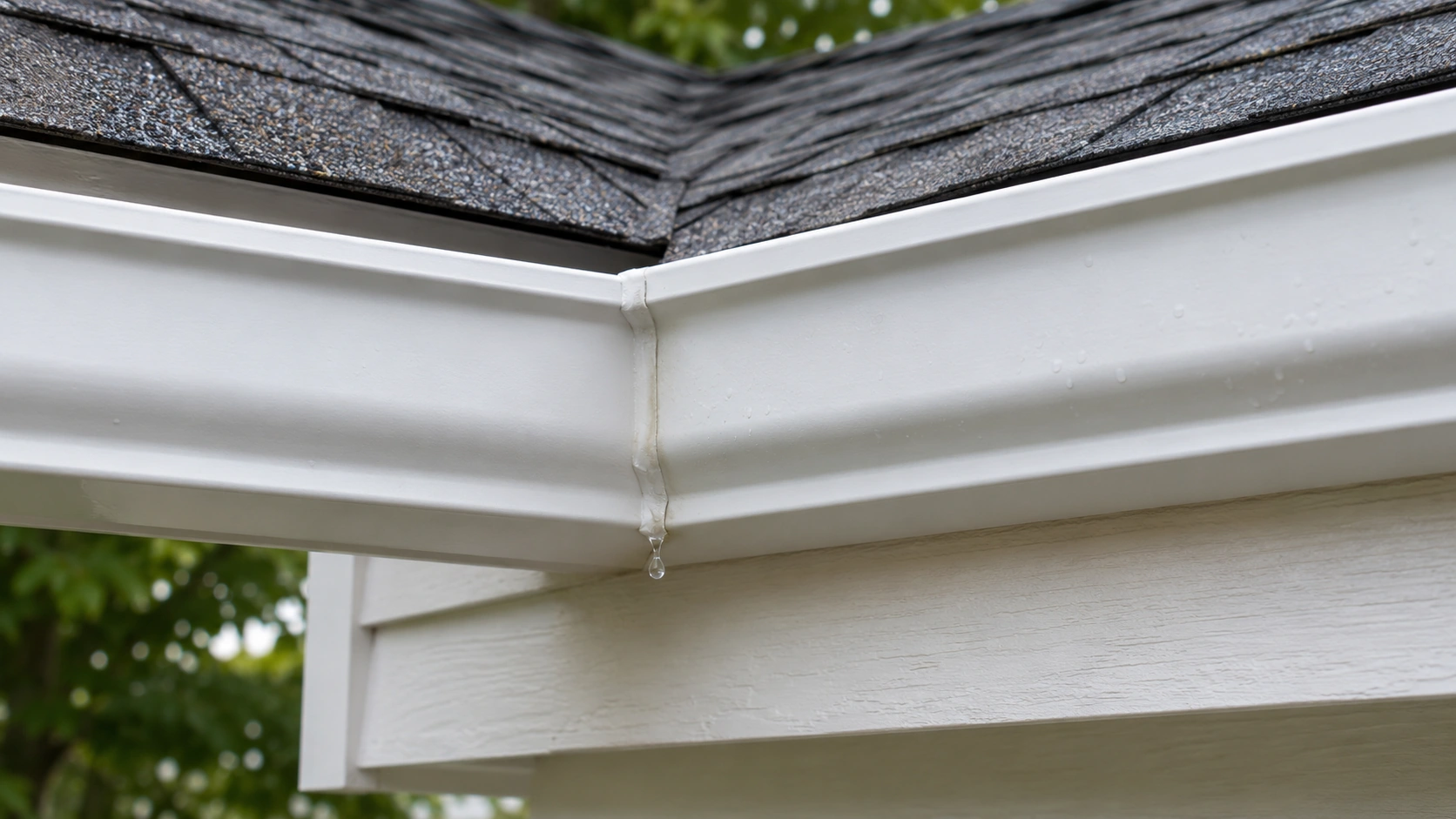
Oakland · Gutter & Downspout Advice
Oakland Gutter Repair: Why Are My Gutters Leaking at the Seams?
Leaking gutter seams on an Oakland home may involve more than old sealant. Learn what joint movement, support and water backup mean for repairs.
Read the guide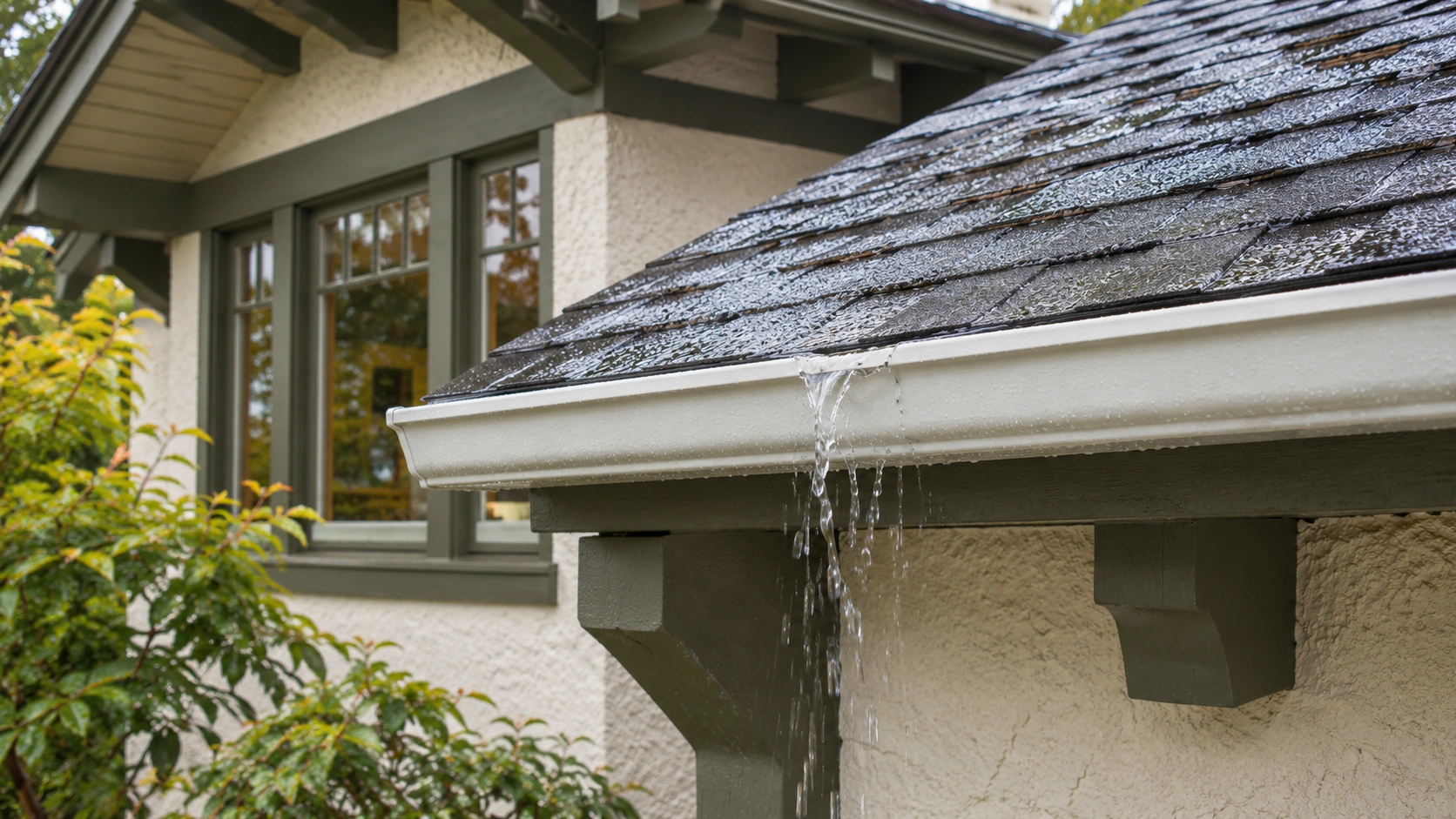
Berkeley · Gutter & Downspout Advice
Berkeley Gutter Repair: Why Do My Gutters Overflow Even When They Look Clear?
Clear-looking gutters can still overflow. Learn what Berkeley homeowners should report about outlets, downspouts, alignment and concentrated roof runoff.
Read the guide