
Roof replacement · Alameda
What is the short answer?
Plan around the work, not a generic day count
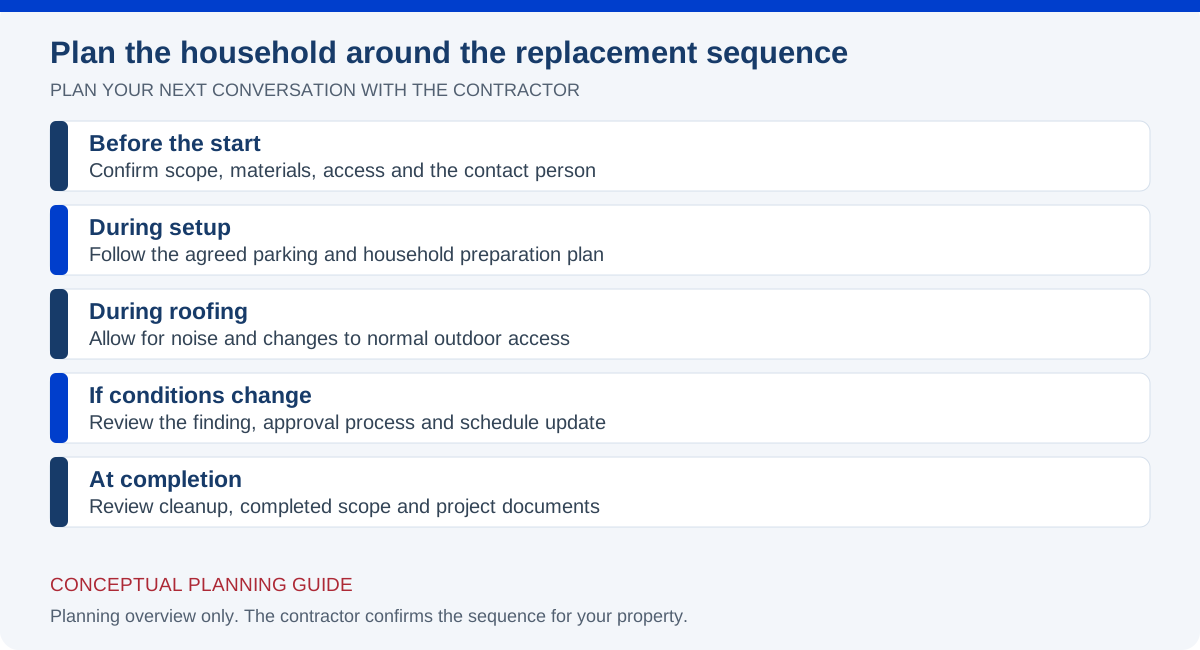
Roof replacement timing depends on the actual roof, agreed work, access, weather and any conditions uncovered during removal. Many households can remain at home, but that decision should follow a discussion about noise, safe access and individual needs. Ask for a property-specific sequence and update process before choosing dates.
The most useful scheduling question is not simply how many days the roof will take. Ask when deliveries arrive, when removal begins, which areas become work zones and how completion will be confirmed. Those details help you plan work, school, vehicles and pets without assuming that every day has the same disruption.
Banner Roofing’s roof replacement service is the starting point for discussing an existing Alameda roof. The Alameda roofing contractor guide covers selection questions; this article concentrates on living around an agreed replacement project.
Roof replacement · Separate preparation from roofing work
What does the replacement timeline actually include?
Separate preparation from roofing work
A complete project sequence starts before materials are removed. There may be a proposal review, material decisions, ordering, coordination of any required approvals and a confirmed start arrangement. The on-site installation period is only one part of that sequence. Ask which milestones must happen before the contractor can give you a reliable start window.
Within that window, separate delivery and setup, removal, assessment of exposed components, installation, cleanup and the final review. Some activities may overlap while others depend on earlier findings. A useful proposal identifies the expected sequence and the person who will explain changes. Keep your own calendar flexible until those arrangements are confirmed.
If two households occupy the property or a detached space shares the access route, include that in the discussion. Name the person who will notify each occupant and decide how visitors enter during work. A small access misunderstanding can disrupt the household even when roofing itself proceeds as expected. Confirm these arrangements again when the start window is agreed, particularly if the original estimate was prepared well before the installation date.
Roof replacement · Ask about the variables on your property
What can change the roof replacement schedule?
Ask about the variables on your property
Roof size, intersecting roof planes, steepness and difficult access can change the work involved. GAF’s timing guidance also identifies weather and concealed roof-deck problems as possible scheduling variables. That is why a general article cannot establish the completion date for your Alameda home. Discuss what is already known and what cannot be assessed until removal.
Ask how the contractor handles an unexpected finding: who documents it, who contacts you, how additional work is described and when a revised schedule becomes available. A contingency conversation is more useful than a confident promise that ignores uncertainty. If your move, travel or another contractor’s work depends on completion, explain that dependency before agreeing to dates.
Roof replacement · Consider the household as well as the roof
Can my family remain at home during the work?
Consider the household as well as the roof
Staying home may be practical when the household can tolerate the disruption and follow the agreed access arrangements. Noise, movement around the building and changes to the normal use of doors or outdoor areas can make working from home or resting difficult. The decision should reflect your particular household, not a blanket rule from a roofing website.
Explain the needs of children, pets, a person who sleeps during the day or anyone who requires dependable access to the house. Ask which entrances will remain available and how unexpected changes will be communicated. If you choose to be elsewhere, agree how the contractor can reach you for decisions and how you will participate in the final review.
| Your situation | Question to ask | Plan to confirm |
|---|---|---|
| Working from home | Which phases are likely to be most disruptive? | An alternative work location if needed |
| Pets or young children | Which doors and outdoor areas become work zones? | Supervision and access arrangements |
| Parking or deliveries | Where will materials and waste handling be located? | Vehicle and delivery instructions |
| Owner away during work | How will approval for changed work be obtained? | A reachable decision maker |
Roof replacement · Agree on clear access expectations
What should I arrange before deliveries and setup?
Agree on clear access expectations
Walk through the practical use of the property with the contractor. Describe a shared driveway, side gate, limited parking, valuable landscaping or stored outdoor items. Ask where equipment, materials and removed roofing will be managed, and who prepares or protects each area. A short written site plan can prevent different assumptions on the first morning.
Do not move heavy materials or prepare roof access yourself. Your role is to identify belongings and access restrictions, then follow the agreed ground-level preparation instructions. Tell regular delivery drivers or other household visitors about temporary entry changes. If a neighbor shares an access route, coordinate that route before work rather than relying on an informal assumption.
Roof replacement · Ask for the contractor’s plan
How should weather and temporary protection be discussed?
Ask for the contractor’s plan
Ask how forecasts affect the decision to start, continue or pause work, and how the roof will be managed between work periods. The answer should fit the actual system and sequence. Do not equate a dry-looking morning with a promise that every planned task will be completed that day. Weather decisions belong with the people responsible for the work.
Keep a record of the agreed contact method if the sequence changes. Ask whether a delay changes your household arrangements or the timing of other work. Avoid interpreting a weather pause as proof that the project has failed; equally, do not accept an unexplained absence as a complete update. A clear communication plan makes those situations easier to distinguish.
Roof replacement · Separate cleanup, review and documents
When is the project complete enough for normal use?
Separate cleanup, review and documents
Ask what the contractor will check before reopening the areas used for work. Discuss waste removal, the review of accessible grounds and how you should report a remaining concern. A visually finished roof and a cleared driveway are useful milestones, but they do not replace the final explanation of the work actually completed.
Retain the final scope, approved changes, photographs supplied by the contractor and applicable written warranty documents. Confirm who handles any outstanding item and how to contact the company afterward. If interior repair or repainting is a separate project, establish that distinction. Roofing completion does not automatically mean every stain or interior finish has been restored.
Roof replacement · Give the estimate the details that affect your day
How do I request a realistic Alameda replacement plan?
Give the estimate the details that affect your day
Begin with the address, roof material if known, prior leak history and the household constraints that matter. Explain any fixed commitments without treating them as a promised completion deadline. Share existing proposals or earlier repair records when useful, so the conversation can distinguish the replacement scope from additional work you may be considering.
Explore Alameda roofing services and local resources and Alameda roof leak detection guidance if the reason for replacement is still uncertain. Then request a roof replacement estimate or call 510.895.4433. Ask Banner Roofing to explain the proposed sequence, access arrangements and how changes will be discussed before work begins.
Roof replacement · Questions & Answers
Alameda Roof Replacement Questions
Can my family stay home during roof replacement?
Possibly, depending on the agreed work arrangements and your household’s needs. Ask about entrances, noise, outdoor work zones and communication. A household that needs quiet conditions may prefer another location during disruptive phases even if access to the home remains possible.
Can Banner promise an exact completion day before assessing the roof?
A useful schedule should follow the property assessment and defined scope. Ask which variables could change it and how you will receive updates. This guide does not promise Banner availability, a start date or a fixed duration.
Do I need to be present throughout the project?
Ask what decisions may require your approval and how you can be reached. If you will be away, identify a decision maker and agree how photographs, proposed changes and completion information will be shared. Presence requirements should be confirmed for the actual project.
Does a roof replacement estimate include interior ceiling repairs?
Do not assume it does. Ask whether interior finishes, moisture-related investigation or other trades are included or separately arranged. The written proposal should identify those boundaries so the roofing scope is not confused with a complete interior restoration.
How do I find the best roof replacement contractor near me in Alameda?
Compare relevant experience, independently verifiable qualifications, a clear written scope and a practical communication plan. Ask how each contractor handles occupied homes and changed conditions. Choose on documented project fit rather than an unsupported best-in-city claim.
Related Roofing Guides
Alameda · Contractor Guide
Alameda Roofing Contractor: How Do I Choose the Best Contractor for Roof Replacement?
Compare Alameda roofing contractors for roof replacement with clear questions about older roof details, written scope, access, materials and homeowner preparation.
Read the guide
Berkeley · roof replacement
Berkeley Roof Replacement: How Do I Choose the Best Contractor for the Job?
Compare Berkeley roof replacement estimates by scope, materials, hidden-condition allowances and cleanup. Learn what to ask before choosing a replacement roofer.
Read the guide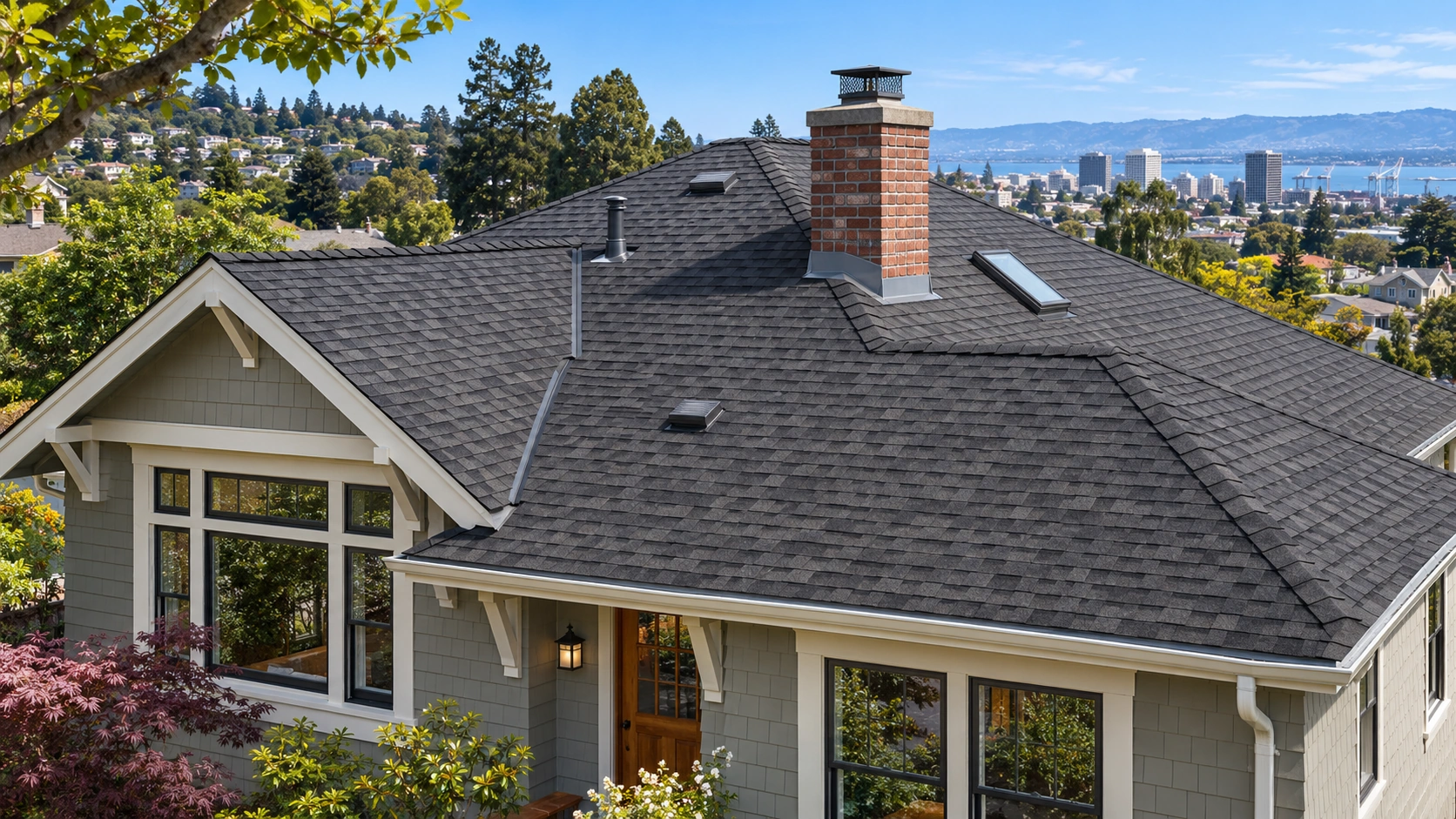
Oakland · Roof replacement
Oakland Roof Replacement Cost: What Makes One Roofing Estimate Higher Than Another?
Why do Oakland roof replacement estimates differ? Compare materials, tear-off, roof details, decking allowances and exclusions before choosing a proposal.
Read the guide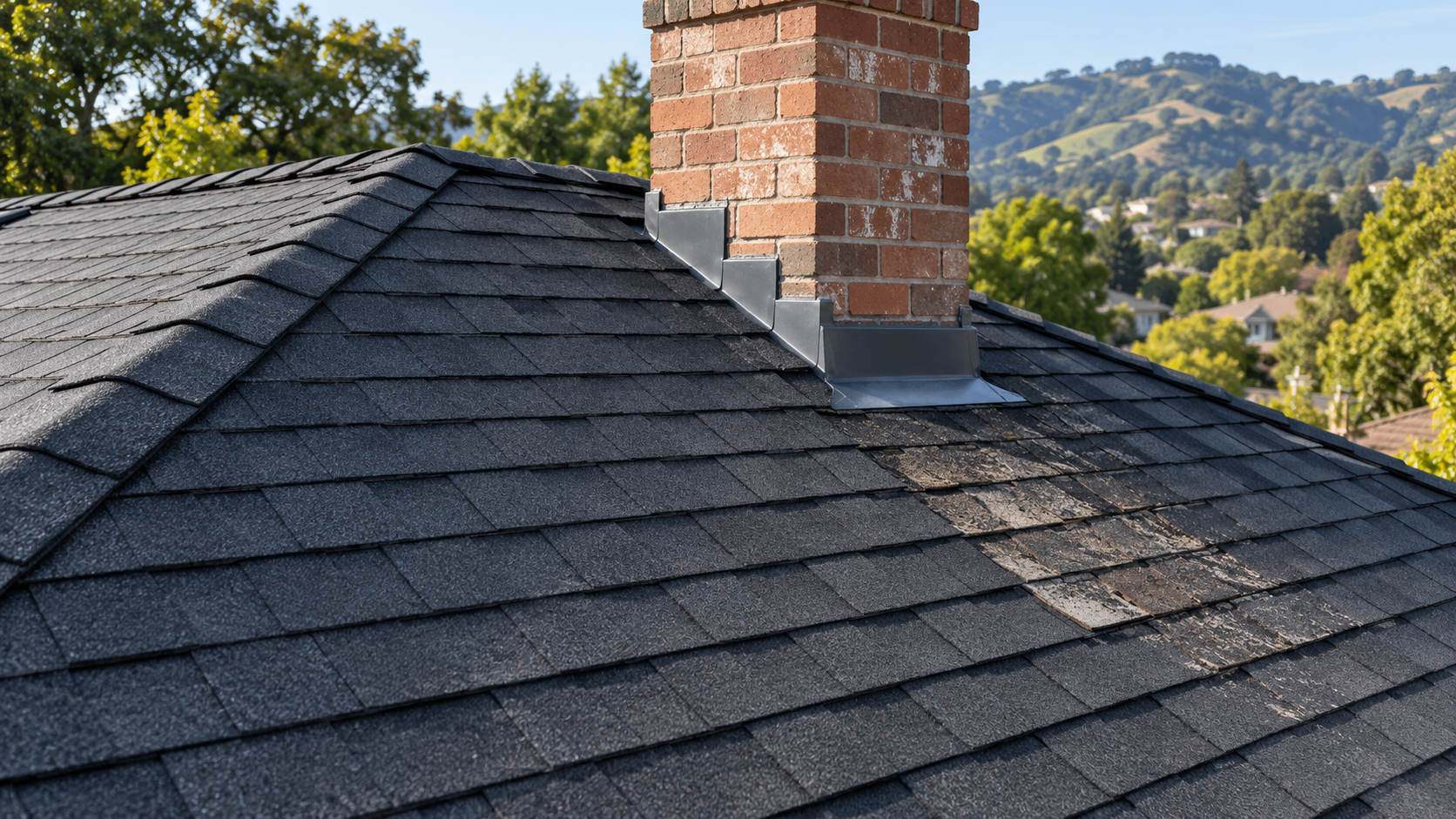
East Bay · Roofing Decisions
Should I Repair or Replace My Roof in the East Bay?
Compare roof repair and replacement in the East Bay. Learn which signs to discuss, what an assessment should cover and how to compare estimates.
Read the guide