
Roof leak detection · San Lorenzo
What is the short answer?
A returning stain needs a documented explanation
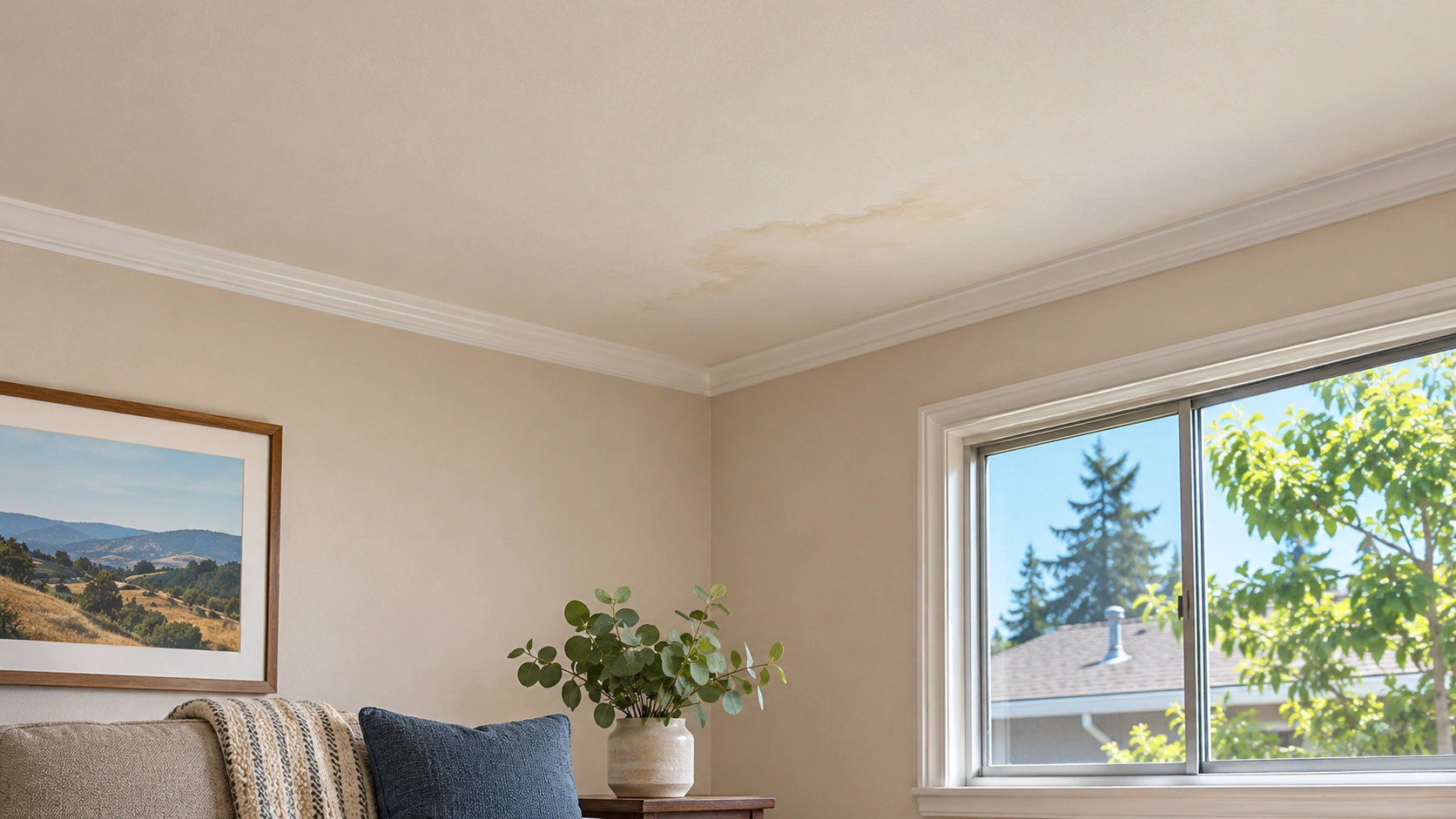
A returning ceiling stain is a reason to investigate moisture, not proof that water is entering directly above it. Record when the mark changes, any active dampness and earlier repairs. A roof leak assessment should explain the evidence, possible water route and any limits or need for another specialist before recommending work.
The frustrating part of a stain is that it can look like a complete answer. A mark reappears in the same room, so another patch is requested above that room. Yet the indoor finish shows where moisture became visible, which may be different from the entry point. A better inquiry starts with the history and the current observations.
Banner Roofing’s roof leak detection service is the appropriate starting point when roof-related water entry is suspected. The San Lorenzo roofing contractor guide explains contractor-selection questions; the record below helps make the assessment specific.
Roof leak detection · Separate the mark from the moisture source
What does a returning stain actually tell me?
Separate the mark from the moisture source
A ceiling mark records a past or present moisture-related event, but its appearance alone does not confirm the source or whether water is entering at that moment. Repainting, changing light and an expanding edge can affect what you notice. Record the change accurately instead of treating every visible mark as the same kind of roof failure.
Note whether there is active dripping, a newly altered area or simply an old outline that remains visible. If you cannot determine whether it is wet, say that rather than testing the ceiling or opening concealed materials yourself. A clear description of uncertainty is useful information. It prevents a contractor from receiving a confident diagnosis that the homeowner never actually confirmed.
When sending photographs, add one wider room view before any close-up of the mark. A close photograph can show discoloration while losing the relationship to walls and visible features. Keep the original image rather than drawing over the only copy. You can describe the affected area in your message and provide another marked version if useful. Photographs are a record for the conversation, not a substitute for assessing the building.
Roof leak detection · Build a short event history
What records help investigate a recurring stain?
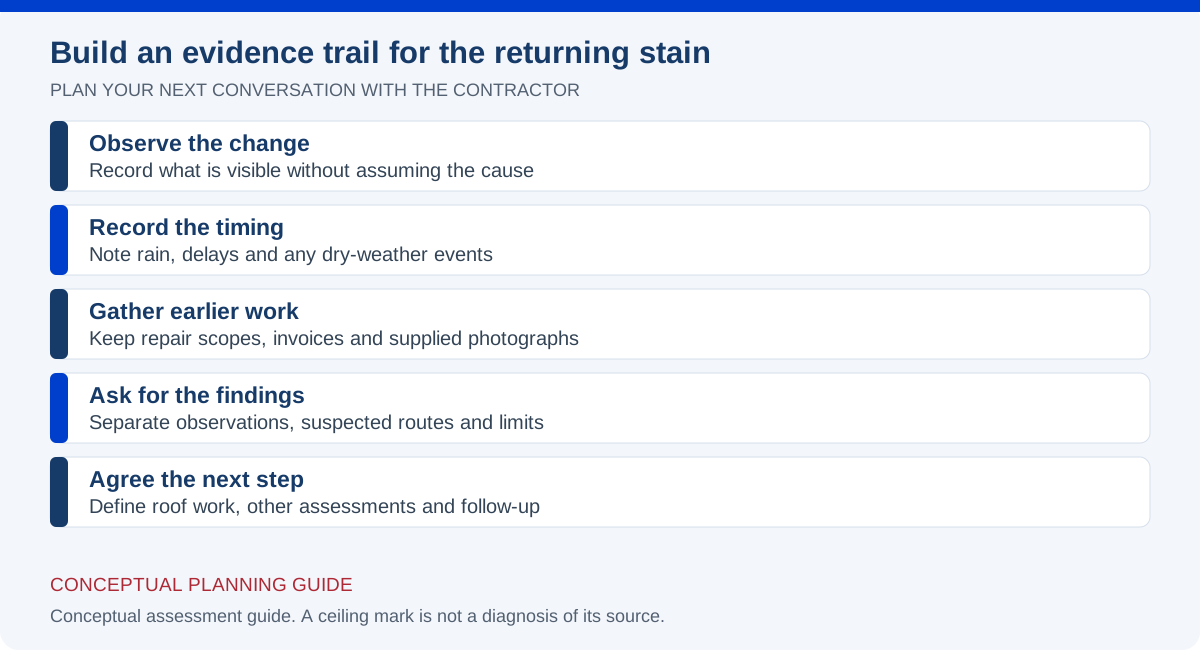
Build a short event history
Keep dated photographs taken from the same safe indoor position. Name the room, the nearest outside wall and any nearby visible feature such as a window or chimney. Record whether the change followed rain, appeared after a delay or happened during dry weather. Approximate observations are acceptable when clearly described as approximate.
Add invoices, prior repair descriptions and any photographs supplied during earlier work. Identify what was repaired and whether the stain stopped changing afterward. A record that says the problem returned months later is different from one that says it continued through the next storm. Neither proves the cause, but both help direct the investigation.
| Record | Useful detail | Avoid assuming |
|---|---|---|
| Photograph | Same room view with the date | The stain identifies the roof entry point |
| Weather timing | When rain and visible changes occurred | Every wet-weather mark has the same cause |
| Earlier work | Repair area and written scope | Any nearby patch addressed the entire route |
| Dry-weather change | Other building activity at the time | The roofing system is necessarily responsible |
Roof leak detection · Ask how the evidence connects
Why might water show up away from the roof opening?
Ask how the evidence connects
Roofing and adjoining building components create more than one surface along which moisture may become visible. An assessment may need to consider transitions, penetrations and adjacent details rather than just the spot above the stain. Ask the contractor to explain the proposed connection between its findings and the indoor symptom in terms you can follow.
GAF identifies damaged roofing, flashing concerns and drainage problems among possible roof-leak causes. That list is a starting point for questions, not a diagnosis of your home. The relevant issue is which condition was actually observed, how it could relate to the reported stain and what uncertainty remains. Several plausible causes should not be presented as several confirmed defects.
Roof leak detection · Allow the assessment to identify its limits
Could the source be somewhere other than the roof?
Allow the assessment to identify its limits
A roof investigation should not be required to conclude that the roof is responsible. When timing or building conditions suggest a different moisture source, ask what additional assessment is appropriate. Describe any nearby plumbing work, equipment changes or other relevant activity without trying to diagnose those systems yourself.
Ask whether the roofing assessment includes only accessible roof components or also involves another agreed area. If a different specialist is needed, keep the notes and photographs together so the next person has the same history. This article does not claim Banner provides plumbing, indoor environmental assessment or every building-envelope service. The service boundary should remain clear as the evidence develops.
Roof leak detection · Request findings and a defined next step
What should the leak assessment explain before repairs?
Request findings and a defined next step
The explanation should distinguish confirmed observations from a suspected route and from areas that could not be assessed. Ask for the affected roof detail, the proposed repair boundary and why that work addresses the reported condition. If access is limited or a concealed area is important, ask what needs to happen before the recommendation becomes more definite.
An estimate should also identify work outside the roofing scope, such as interior finishes or further investigation. A short, understandable written explanation is more useful than an unexplained technical label. For broader diagnostic-selection questions, read the roof leak detection guide and apply its questions to your San Lorenzo property rather than assuming the same cause.
Roof leak detection · Describe the current condition promptly
When should a recurring stain be treated as urgent?
Describe the current condition promptly
Active water entry or a ceiling that appears unstable deserves prompt attention to the immediate situation. Keep people away from a visibly affected area and obtain appropriate help when water is near electrical fittings or another hazard is present. Do not climb onto a wet roof or stand beneath unstable ceiling material to improve your photographs.
Banner’s East Bay emergency roof repair guide explains useful first-contact information. Ask directly about current availability; a guide cannot guarantee an arrival time. When there is no active emergency, arrange the investigation rather than waiting for another event solely to obtain more evidence. Existing records can still support the initial conversation.
Roof leak detection · Keep the original symptom in the record
How should I follow up after the agreed work?
Keep the original symptom in the record
Ask what changes to report, how to contact the contractor and whether a further review is recommended for your circumstances. Continue using the original room description and photographs so a later conversation can compare the same area. Repainting a ceiling is an appearance task and should not be used by itself as proof that the moisture source has been resolved.
Confirm San Lorenzo service coverage, then request a leak-source assessment or call 510.895.4433. Share when the stain returned, what earlier work was done and whether water is currently entering. Those details help Banner discuss the investigation and the appropriate next step.
Roof leak detection · Questions & Answers
San Lorenzo Roof Leak Detection Questions
Does a stain after repainting mean the roof is still leaking?
It is a reason to review the history and current moisture evidence, but appearance alone does not prove an active roof leak. Explain when the mark changed and whether there is dripping or newly observed dampness. Keep interior finish work separate from source investigation.
Should I ask the roofer to patch directly above the stain?
Describe the stain’s location, but ask for an assessment of the possible entry route before specifying a repair. The indoor symptom may not identify the roof detail responsible. A proposal should connect observed findings to the recommended work.
What if the stain appears when there has been no rain?
Report that observation and any relevant building activity. It may change the investigation or identify a need for another specialist. Do not withhold dry-weather events because you initially assumed the roof was the cause.
Can Banner identify the source from a photograph?
Photographs help communicate the symptom and plan the discussion, but they may not reveal the cause or concealed condition. Ask what the assessment requires and what limitations apply. No remote photograph-based diagnosis is promised here.
How do I find roof leak detection near me in San Lorenzo?
Look for a contractor who asks about timing, earlier work and observed conditions, then explains findings and scope limits clearly. Contact Banner with your address and leak history to confirm the available assessment scope and scheduling.
Related Roofing Guides
San Lorenzo · Contractor Guide
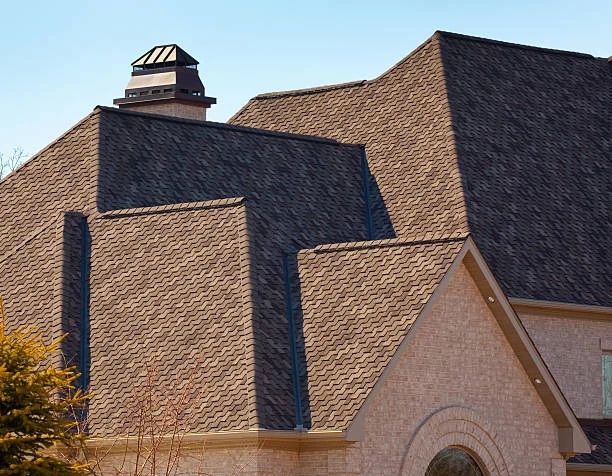
San Lorenzo Roofing Contractor: How Do I Choose the Best Contractor for Shingle Roof Repairs?
Compare San Lorenzo roofing contractors for shingle roof repairs. Learn how to evaluate damage findings, current credentials and a clear written repair scope.
Read the guide
Alameda · roof leak detection
Alameda Roof Leak Detection: How Do I Find the Best Roofer to Locate a Leak?
Find out what to record before an Alameda roof leak assessment, why ceiling stains can mislead and how to compare diagnosis and repair recommendations.
Read the guide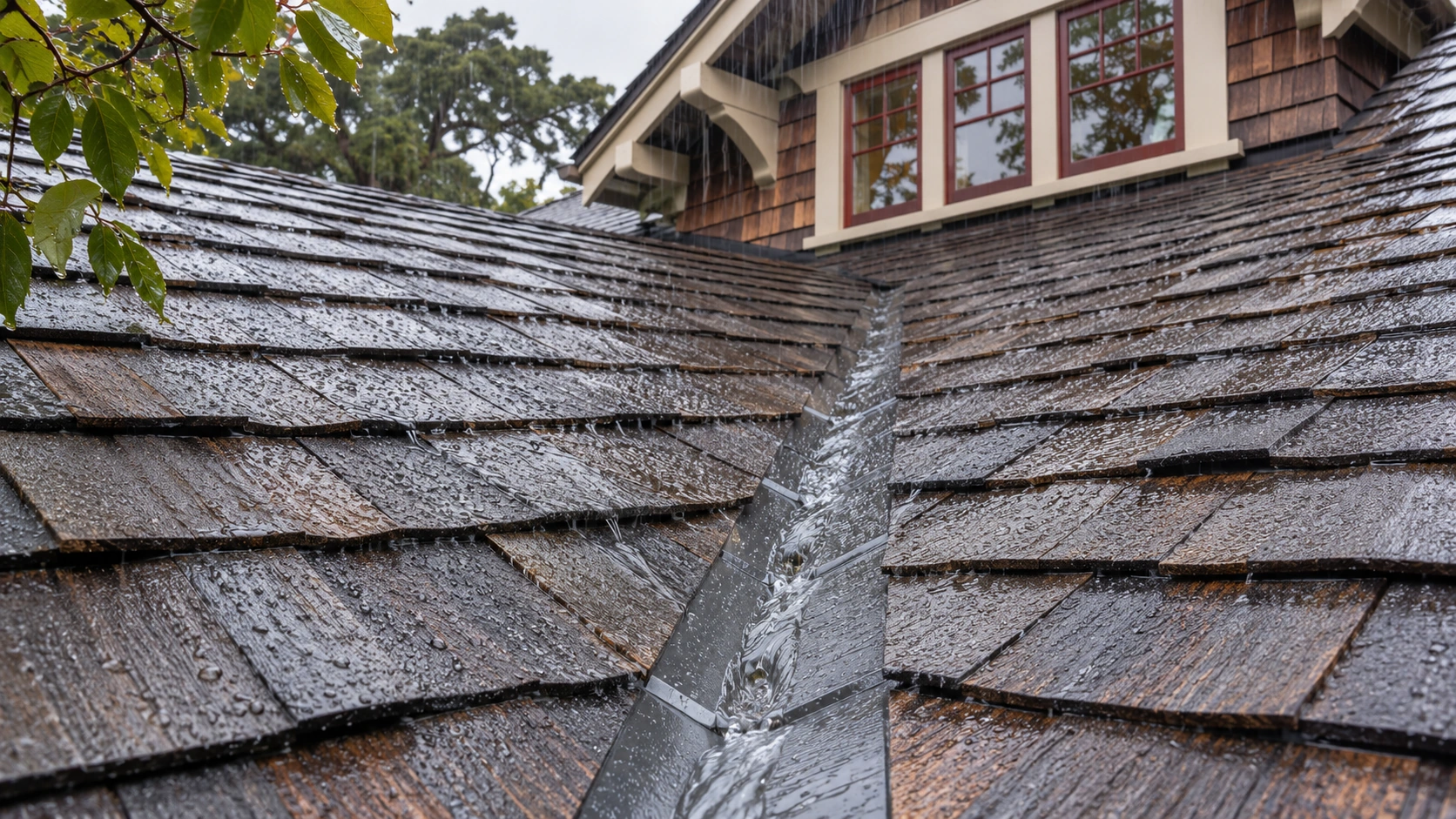
Berkeley · Roof Repair Advice
Berkeley Roof Leak Repair: Why Does My Roof Leak Only During Heavy Rain?
Does your Berkeley roof leak only in heavy rain? Learn what rainfall patterns, flashing and drainage observations can tell a roofer about the problem.
Read the guide
Castro Valley · Roof Repair Advice
Castro Valley Roof Repair: How Can I Tell Whether Roof Flashing Is Causing a Leak?
Learn how flashing relates to roof leaks in Castro Valley and which observations help a roofer investigate chimneys, walls and roof penetrations.
Read the guide