
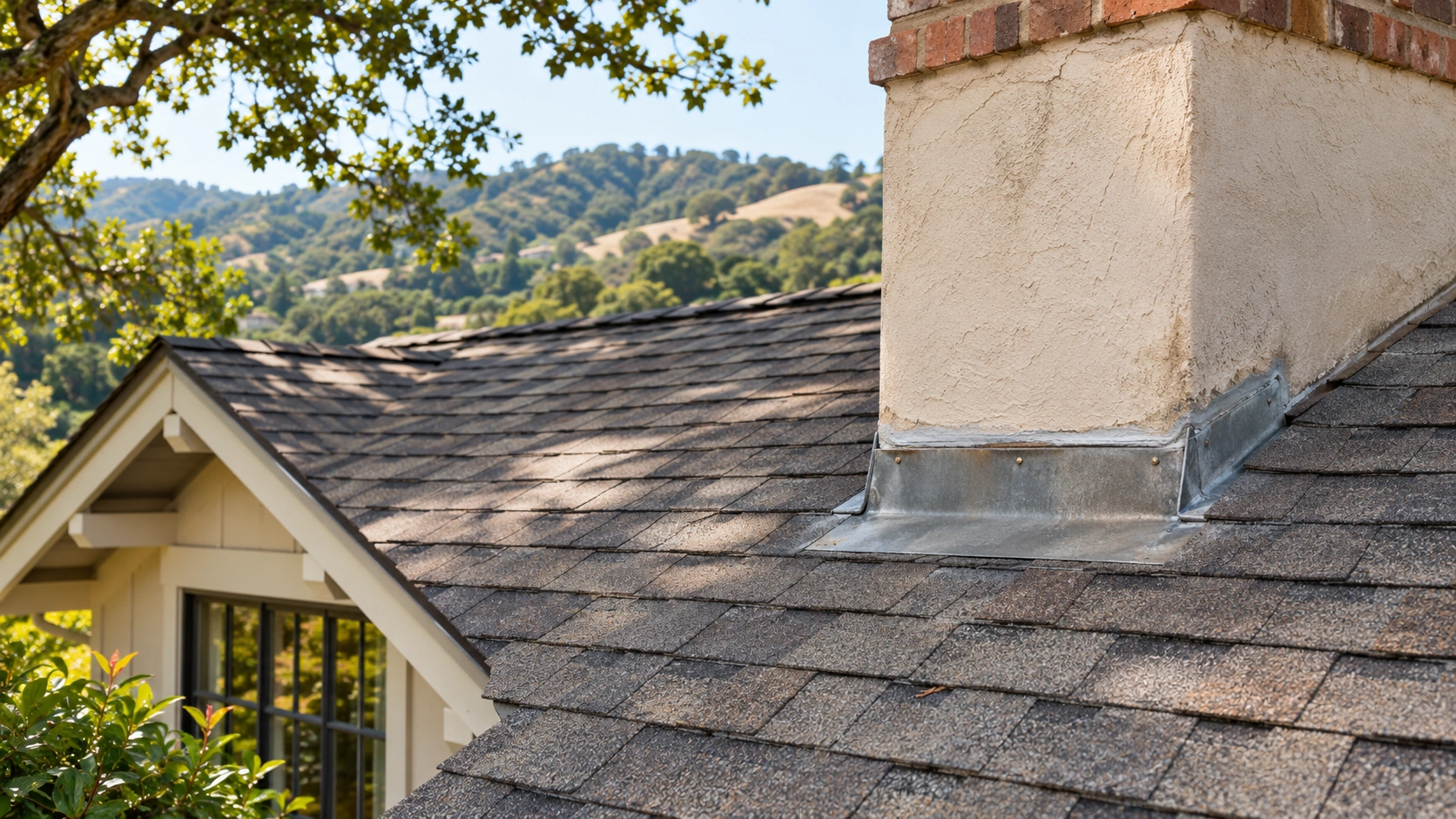
Roof repair · Orinda
What is the short answer?
Ask what the next repair will address differently
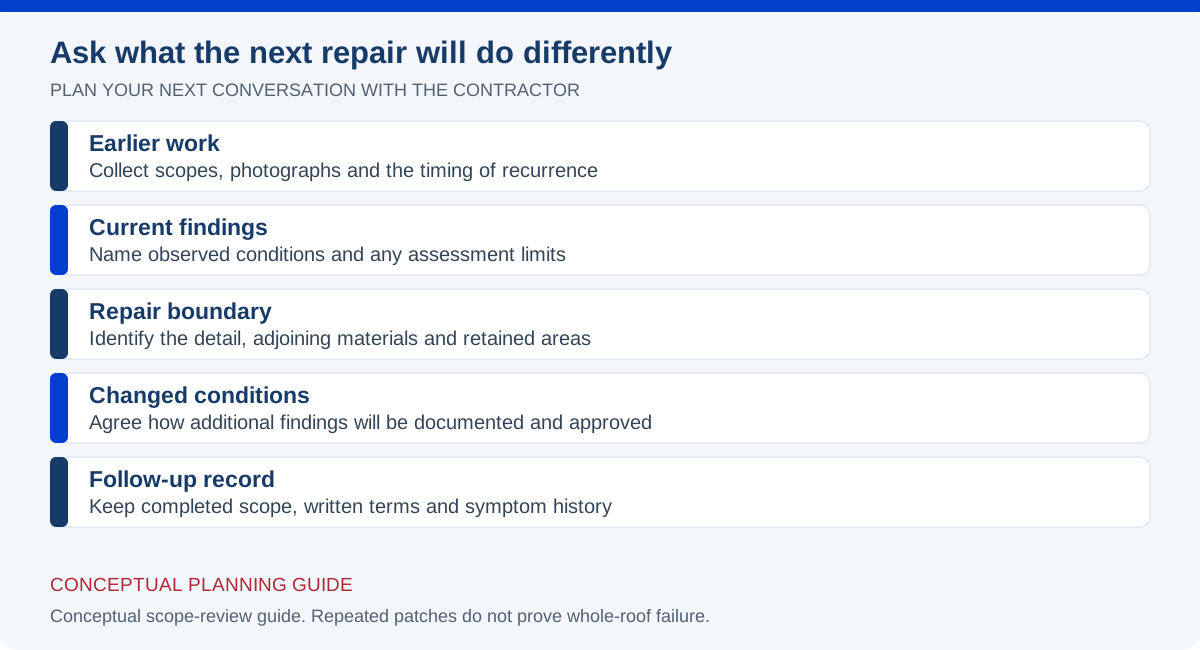
When the same area leaks after repeated patching, ask for a review of the findings and repair boundaries before approving another patch. The next proposal should explain the suspected water route, the components it will address and why that scope differs from earlier work. Repeated leaks do not automatically prove that the whole roof needs replacement.
A patch can become a familiar response to an unfamiliar problem. Water appears in the same room, more material is added near the earlier repair and everyone waits for the next storm. If the concern returns, a useful next step is to reconstruct what was actually found and repaired rather than simply repeat the last instruction.
Banner Roofing’s roof repair service provides the service route for that conversation. The Orinda roofing contractor guide addresses contractor selection; the questions below focus on defining a repair after an earlier attempt did not resolve the reported concern.
Roof repair · Collect the repair history without guessing
What should I document about the earlier patches?
Collect the repair history without guessing
Gather invoices, estimates, written explanations and any photographs supplied during earlier work. Identify the area described in each scope and whether the same indoor symptom returned immediately, after a later storm or much later. If the earlier work is poorly documented, say so. A contractor should not have to interpret an uncertain homeowner recollection as a confirmed construction detail.
Also record what changed after each visit. The drip may have stopped while a stain remained, or one reported area may have improved while another became visible. Those observations deserve separate entries. A clear timeline can help the next assessment distinguish an unresolved source, a changed condition and more than one concern without deciding the answer in advance.
When comparing a new estimate with an earlier invoice, place the named work areas side by side. A larger proposal may include components that the earlier patch never addressed, while a similar price may describe a very different boundary. Ask the contractor to explain that difference before treating either quote as better value. The comparison becomes useful when it shows the intended outcome, the retained conditions and the reasons for the proposed scope.
Roof repair · Question the scope before blaming one material
Why might another patch fail to solve the problem?
Question the scope before blaming one material
A visible patch may cover only part of the detail associated with water entry. The next assessment may need to consider adjoining roofing, flashing or another interface as well as the patched surface. Ask what findings support that review instead of assuming that a different sealant is automatically the answer.
GAF’s repair guidance treats the roof as a system with connected components and notes that repair suitability requires professional assessment. In your case, the useful question is specific: what condition will the new work correct that earlier work did not? An answer should name the affected area and explain the relationship to the reported leak, while acknowledging anything that remains uncertain.
Roof repair · Connect the finding to the repair boundary
What should a new repair proposal explain differently?
Connect the finding to the repair boundary
Request a description of the observed condition, the area to be opened or repaired where applicable and the materials or components included. Ask how the work boundary was chosen. A proposal that simply repeats roof leak repair may leave you unable to compare it with the earlier patch or understand the reason for a changed price.
Clarify which surrounding components will be retained and what happens if the planned access reveals a different condition. Ask how that finding will be documented and approved before additional work proceeds. A defined change process does not eliminate uncertainty, but it keeps uncertainty from becoming an unexplained expansion of the job.
| Proposal question | Useful explanation | Unresolved issue to clarify |
|---|---|---|
| What was found? | A named detail and observed condition | A diagnosis based only on the ceiling stain |
| What will change? | The components and repair boundary | A promise to add more material without a reason |
| What remains? | Retained areas and known limitations | An implied guarantee for the whole roof |
| What if access reveals more? | A documented approval process | Automatic extra work without a defined decision |
Roof repair · Consider the transition rather than one spot
Could flashing or adjoining materials be part of the route?
Consider the transition rather than one spot
Roof-to-wall junctions, chimneys, penetrations and changes in roof geometry are useful subjects for assessment when relevant to the actual area. They are not confirmed defects simply because a nearby room leaks. Ask the contractor to explain which transition was reviewed and what evidence connects it to the reported event.
The roof flashing leak guide explains the distinction between an indoor symptom and a roof-interface finding. Use those questions for your Orinda home without assuming the same construction or problem. If adjoining wall, chimney or other work is outside the roofing scope, ask how that boundary affects the proposed repair and who should assess the remaining concern.
Roof repair · Compare evidence for the wider recommendation
Does repeated patching mean I need a complete replacement?
Compare evidence for the wider recommendation
Not by itself. A localized condition and a broadly deteriorated system lead to different discussions. Ask what has been observed beyond the repeatedly patched area and why it changes the available options. The number of visits is relevant history, but it does not measure how much sound roofing remains.
If both repair and replacement are proposed, compare their actual boundaries, retained components and uncertainties. The East Bay repair-versus-replacement guide can help organize that comparison. Avoid choosing solely by the smaller initial price or a blanket roof-age rule. You need to know what each option is intended to resolve and what it leaves outside the work.
Roof repair · Keep the reference point consistent
How should follow-up and a returning symptom be handled?
Keep the reference point consistent
Before authorizing work, ask who to contact if the symptom returns and what information should be supplied. Retain the final scope, approved changes and completion photographs when provided. Compare future events against the same room location and timing notes used in the initial assessment. Clear records make a follow-up more useful than a message saying the roof is bad again.
Confirm the actual written terms that apply to the proposed repair. Do not assume the repair includes every roof area, future weather event or interior finish. Ask about any stated limitations in plain language. If active water entry is occurring, describe that promptly and obtain appropriate help without climbing onto the roof to investigate the repair yourself.
Roof repair · Ask for a documented explanation
How do I request a more useful Orinda roof repair assessment?
Ask for a documented explanation
Share the address, roof material if known and earlier repair records. Explain where water becomes visible and whether the event depends on particular rain or wind conditions. Be clear about what you observed and what another person previously suggested. That separation allows the next contractor to evaluate the evidence without inheriting an uncertain conclusion as fact.
Check Orinda service coverage, then request a documented roof repair assessment or call 510.895.4433. Ask Banner Roofing what the assessment can establish, what access is needed and how any recommended work will be described. The goal is a clear next decision supported by the actual condition of your roof.
Roof repair · Questions & Answers
Orinda Roof Repair Questions
Should I approve another patch or ask for a wider assessment?
Ask what the proposed patch would address and how it differs from earlier work. A wider assessment may be useful when the source or boundary remains uncertain. The decision should follow findings, not simply the fact that a familiar patch location exists.
Do repeated leaks prove my entire roof has failed?
No. They show that the reported problem needs further attention. Ask what is known about the local detail and the surrounding system. A replacement recommendation should explain the wider condition that supports it rather than rely only on the number of previous repairs.
Can another roofer assess work done by someone else?
Ask the new contractor what records and access are needed and what the assessment can determine. Share earlier scopes and photographs where available. An assessment should describe current findings without making unsupported claims about an earlier contractor’s actions or motives.
Will a new repair include repainting the ceiling?
Only if that work is explicitly included in the written scope. Interior finishes and further moisture-related assessment may be separate. Ask about those boundaries before approving work so the end of the roofing repair is not confused with a complete interior restoration.
How do I find the best roof repair contractor near me in Orinda?
Look for someone who asks about the repair history, distinguishes observations from assumptions and explains the proposed work clearly. Request a written scope and applicable terms. Banner can discuss your Orinda property and confirm the available assessment and repair scope.
Related Roofing Guides
Orinda · Contractor Guide
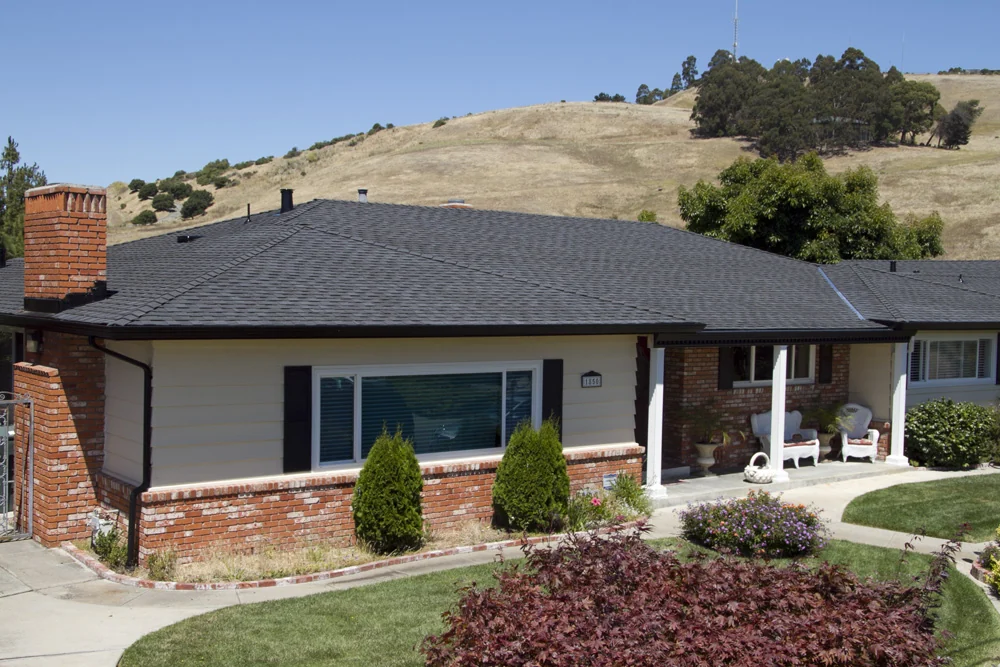
Orinda Roofing Contractor: How Do I Choose the Best Contractor for Roof Replacement?
Looking for an Orinda roofing contractor for roof replacement? Learn how to compare project scope, material proposals, site arrangements and written terms.
Read the guide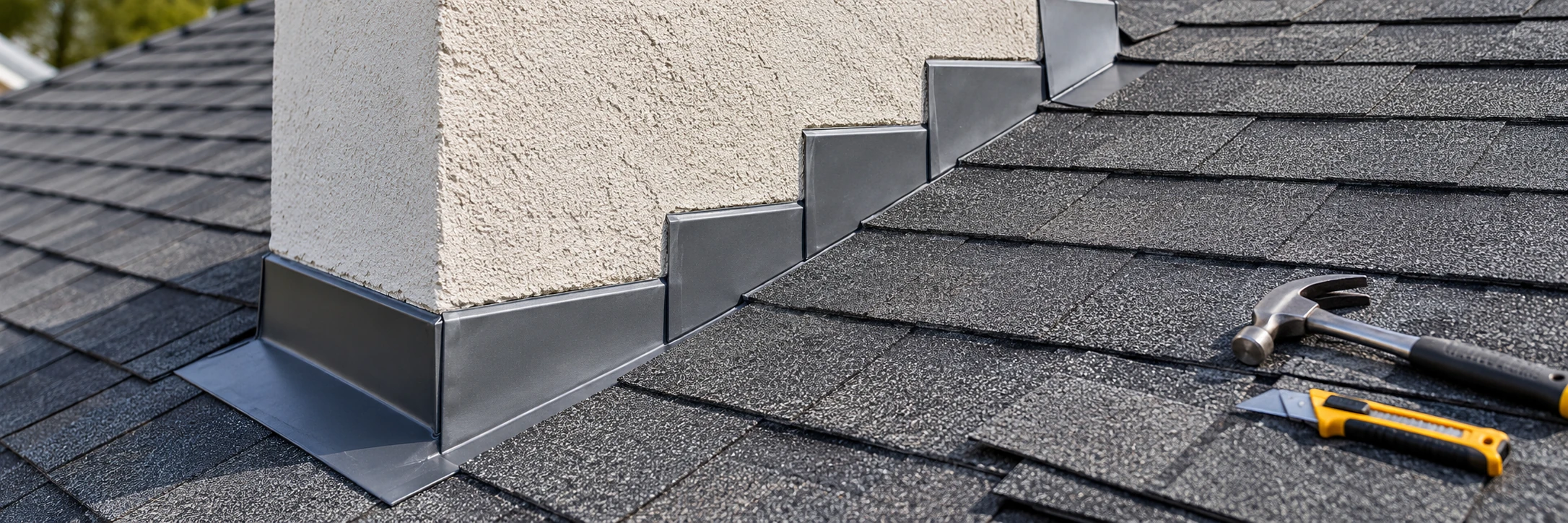
Oakland · roof repair
Oakland Roof Repair: How Do I Choose the Best Roofer to Assess a Leak?
Prepare for Oakland roof leak repairs with clear questions about diagnosis, previous repairs, flashing, written scope and choosing a roofer for the assessment.
Read the guide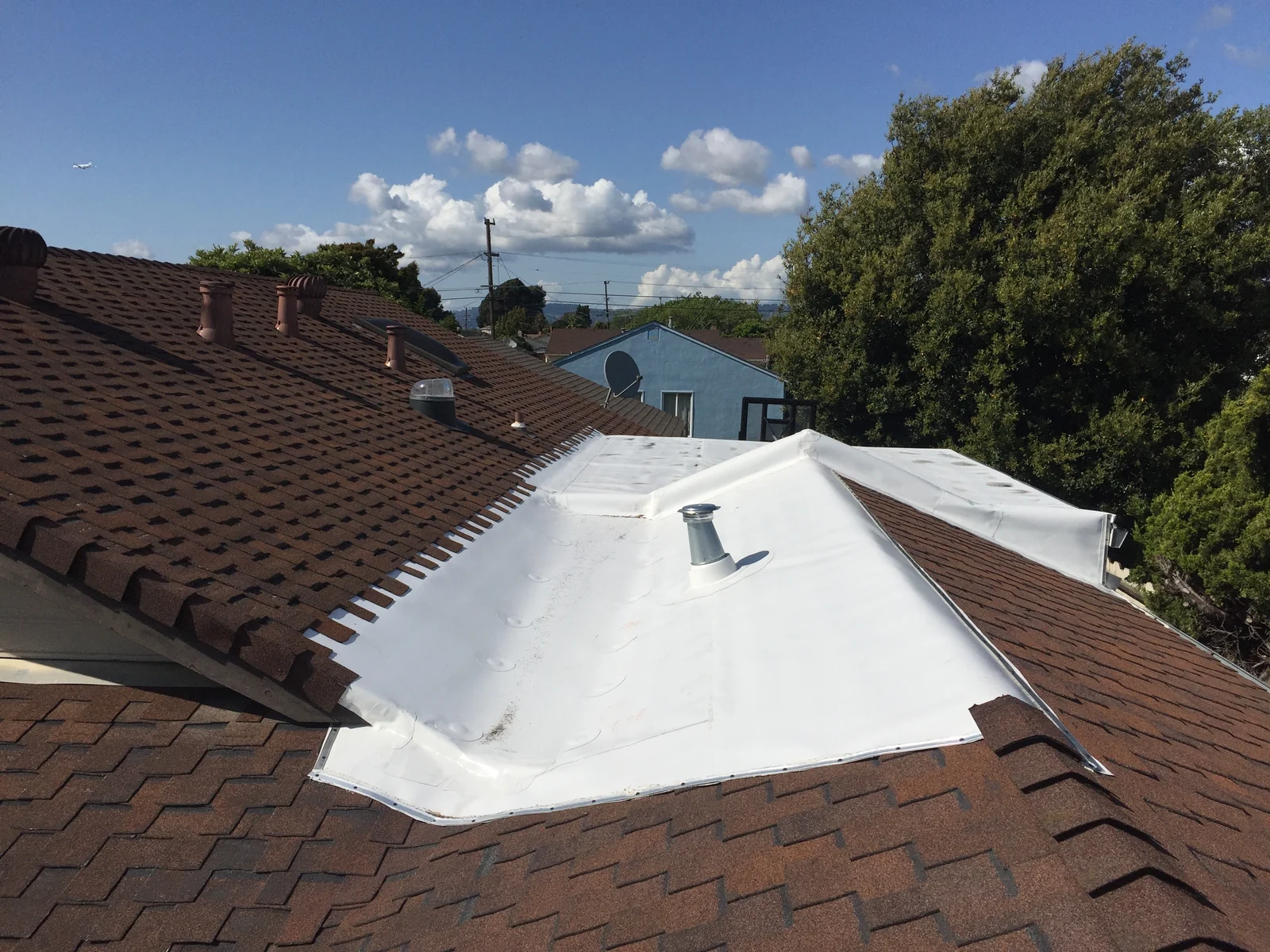
Castro Valley · roof repair
Castro Valley Roof Repair: How Do I Find the Best Roofer for Damaged Tiles?
Need Castro Valley roof repair for damaged tiles? Learn what to ask about cracked tiles, underlying water protection, leak diagnosis and a written repair scope.
Read the guide
East Bay · Roof Repair Advice
East Bay Emergency Roof Repair: When Does a Roof Leak Need Urgent Attention?
Learn when an East Bay roof leak needs urgent help, what to report to a roofer and how temporary protection differs from a permanent repair.
Read the guide